

Vale John Stone – the consequential economist

by PAUL COLLITS – THE last of Australia’s great public servants died last week. John Stone passed away, aged 96. 

He was the mandarin’s mandarin in an age, now long gone, when public servants were not contract-restricted and were largely invisible to the public who they faithfully served. 

John Stone’s successors have not shared his distinguished intellect nor his policy smarts. They include the forgettable Bernie Fraser, the still active and activist Ken Henry and the mediocre climateer, Martin Parkinson. God help us all.

They weren’t junkies for public acclaim, weren’t ever on the speakers’ circuit, gave ministers “frank and fearless” advice, and didn’t let whatever ideological beliefs they had get in the way of their day jobs.

And they knew very clearly what their day jobs were. Most importantly, they weren’t employed for their ideological beliefs. No one then ever knew what those were.

DEEP

John Stone’s career – which continued deep into his formal “retirement” – had three stages.

The first was his storied public service career, in the Treasury. The second, which took many people by surprise, was his dipping of the toes into politics as a National Party Senator for Queensland under the banner of the truly legendary Sir Joh Bjelke-Petersen.

The third was his post-politics foray into the creation of think tanks.

Oh, and he was a superb writer whose wordsmithery matched his unmatched intellect.

Stone’s tenure as Treasury Secretary was from 1979 to 1984. He followed in the footsteps of a long line of great mandarins that included Roland Wilson and Frederick Wheeler. Sirs both. John Stone more than filled the shoes of those legendary mandarins.

One of his notable acts as Treasury Secretary was to oppose Keating’s 1983 push to deregulate the dollar. That surprised some.

Stone left the public service with a bang, with his famous, pointed and controversial 1984 Ed Shann lecture. He spoke mostly about the sclerotic industrial relations of his time.

He resigned at that time, being pretty pissed off with the direction of government policy.

Justice Dyson Heydon includes mention of this lecture, in his astonishingly comprehensive and valuable review of the lives of John and Nancy Stone.

Stone’s successors have not shared his distinguished intellect nor his policy smarts. They include the forgettable Bernie Fraser, the still active and activist Ken Henry and the mediocre climateer, Martin Parkinson. God help us all.

John Stone wrote about Treasury’s intellectual decline, with feeling and, no doubt, not a little sorrow, in a book review. Inevitably and characteristically, he corrected some errors made by the author.

The once great Treasury is now in the hands of economic illiterates, millennial ideologues and assorted goons.

He’ll be missed mainly because there is no one like him in public life or public service any more.

I cannot imagine that any of them will recognise John Stone’s passing, nor pause to lament what has been lost. On their watch. They don’t know what they don’t know.

The second stage of Stone’s public career took many by surprise. He became a Senator and a champion of Queensland’s Hillbilly Dictator.

But, once in the Senate (from 1987), he formed an alliance with the equally legendary Labor Finance Minister, the dry and anti-green campaigner, Peter Walsh. Another purveyor of truth in the face of fashionable bullshit.

ALLIANCE

That was an alliance that continued into their respective retirements from political life.

The third stage of John Stone’s career was just as unexpected. He founded not one but two societies of consequence, the HR Nicholls Society and the Samuel Griffith Society. They survive to this day.

The SGS, in particular, has prospered and has been consequential. The HRN Society set out to free up industrial relations. The SGS is the Australian equivalent of the American Federalist Society, focused on originalist constitutionalism.

An astonishing career, and an astonishing life.

The great Rowan Dean of The Spectator Australia and Sky New’s Outsiders program summed Stone up thus: “It is with great sadness and affection that we report on the death of John Stone, a long-time contributor to and friend of  The Spectator Australia magazine.

“John Stone was a major figure in Australian conservative politics, who rose to become head of Treasury and then a Nationals Senator for Queensland. As John Howard has noted, John Stone was one of the most gifted and talented of Canberra’s top public servants, unsurpassable in his economic knowledge and advice.”

Indeed.
My own limited and brief but much valued conversations with John mainly occurred at Samuel Griffith Society conferences and Quadrant dinners.

He was kind enough to mention publicly something I had written at one of these occasions. The last time I saw him was in Sydney a few years back.

He was then well into his nineties, but was still attending and making typically acerbic interventions at conferences.

BOLD

One of John Stone’s memorable speeches was at the launch of a Quadrant book called The Howard Era. Stone made the bold claim – in light of the conventional conservative wisdom that Menzies was the main man – that John Howard was Australia’s greatest prime minister.

A judgement I have been willing to entertain over time, with considerable reservations in hindsight.

But Stone spent the first twenty minutes of the speech analysing in detail the appalling errors of the Howard Government. His biggest gripe was Work Choices, a disastrous play both politically and policy-wise.

The former PM was getting a little uneasy by then.

(Of course, Stone and Howard had a little history. Stone was Treasury Secretary for several years during Howard’s tenure as Malcolm Fraser’s Treasurer. Then, when Howard was struggling as Opposition Leader during the 1987 election, Stone aligned himself with the ill-fated Joh for Canberra campaign, which did Howard in in that election.)

John Stone outlived (just) his beloved wife of seventy years, Dr Nancy Stone, an intellectual and activist of renown in her own right.

He is survived by his five children, including Dr Andrew Stone, an author, economist and an adviser to Tony Abbott when Prime Minister.

Abbott’s tribute is notable: “The passing of John Stone AO leaves Australia bereft of one of its most unflinchingly courageous public intellectuals. He died yesterday, at home, with his family by his side, aged 96.

“In a long public life, that included heading up the Federal Treasury, three years in the Senate, founding both the HR Nicholls and the Samuel Griffith societies, and innumerable columns and articles for newspapers and magazines, John was perhaps our most prominent contrarian: someone who exposed the orthodoxies of the day to withering and fearless scrutiny, saying what he believed needed to be said but that almost no one else would. For an example, one might look to his column in The Spectator on March 1, 2023.

INTELLECTUAL

“In many of John’s endeavours, especially in running the two intellectual societies that have stood so steadfastly for intellectual freedom, individual responsibility and the rule of law, his indispensable colleague and soul mate was his late wife Nancy.

“While he would not shrink from argument, even with his friends, when he thought people were wrong, he was a wonderfully encouraging mentor. I was the beneficiary of a number of lunches and meetings that John instigated at pivotal points in my public life: invariably urging me to be more ambitious for the higher things.

“It was typical of John that despite quite a few clashes over tactics and numerous expressions of policy disappointment, he concluded in a notable 2008 Quadrant essay, that John Howard was undoubtedly ‘Australia’s greatest prime minister’.

John Owen Stone will be greatly missed. Including by me.

His enemies referred dismissively to his tenure as “the stone age”. As if he was a Neanderthal.

I think we know who the Neanderthals are here. Well, the past might be a foreign country, but it is increasingly a place to which we might all like to retreat.

Very few Australians these days would even have heard of John Stone, nor will anyone much recognise just why he was important, and so, why his passing is so significant.

He will be missed mainly because there is no one like him in public life or public service any more. He is of a category no longer known to us.

Above all, he lived the life he would have wanted to live, something that, sadly, not many of us can say.PC

Paul Collits

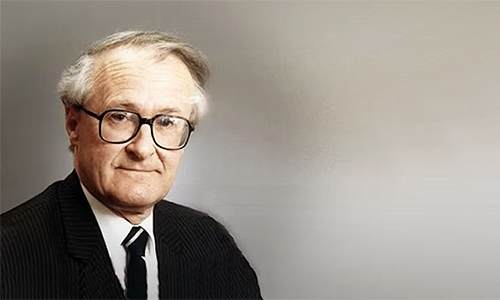
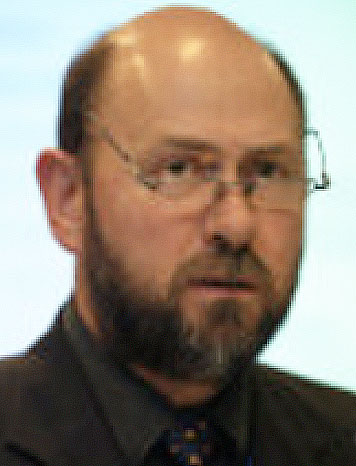
MAIN PHOTOGRAPH: John Stone. (courtesy Wikipedia)

1 thought on “Vale John Stone – the consequential economist

Comments are closed.