








Obama in his usual slow-talking drawl told a mainly youthful audience at Queensland University that “the incredible natural glory of the Great Barrier Reef is threatened”.
He said he did not have time to go to the Reef then but, “I want to come back, and I want my daughters to be able to come back, and I want them to be able to bring their daughters or sons to visit. And I want that there 50 years from now”.
ALARMING
Obama is yet to make a return visit to check that the Reef is still there.
I can only imagine he might have his hands full dealing with the latest alarming revelations by National Intelligence Director Tulsi Gabbard about election interference during his term. (She has claimed there is firm evidence of fabricated reports by senior security officials about alleged Russian collusion on behalf of Donald Trump in the 2016 Presidential campaign.)
The fate of the reef is back in the headlines after the latest report from the Australian Institute of Marine Science (AIMS), which climate catastrophists and media sycophants have seized upon.

It claims hard coral cover has declined significantly across the reef, following a record bleaching event in 2024.
Cyclones, associated flooding and outbreaks of crown-of-thorns starfish have reportedly compounded the impacts, with record coral losses in both the northern and southern regions.
It says the reef retains higher levels of coral than most others around the world, but faces a “volatile” future.
The report, however, also states that while coral losses were significant, they came off a high base, with observed coral cover now sitting at “near to long-term average levels”.
Oops. I hope Barack is following this and that he reads a recent report in The Australian newspaper by scientist Dr Peter Ridd, who had his tenure with James Cook University terminated in 2018.
His sacking stemmed from critical comments he made about colleagues and reef researchers which allegedly breached its code of conduct. But that hasn’t silenced him by any means.
Dr Ridd reported the latest 2025 statistics show “the reef is still doing fine despite having six allegedly cataclysmic coral bleaching events in the past decade. There should be no coral at all if those reports were true.
“The normalised coral cover dropped from a record high number of 0.36 down to 0.29, but there is still twice as much coral as in 2012,” he said.
“The raw coral cover number for all the past five years has been higher than any of the previous years since records began in 1985.
“Analysis of the data at smaller scales shows the reef is doing what it always does – change.”
Dr Ridd said this was a constant dynamic as cyclones, starfish plagues and bleaching events kill lots of coral in small areas, while it quietly regrows elsewhere.
“The institutions often justify this embarrassingly high coral cover as just ‘weed coral’. But the type of coral that has exploded over the past few years is acropora, which is the most susceptible to hot-water bleaching,” he said.
“How can we have record amounts of the type of coral that should have been killed, again and again, from bleaching? The acropora takes five to 10 years to regrow if it is killed.”
Dr Ridd said there were two conclusions that must be drawn. First, not much coral has been killed by climate change bleaching – at least not compared to the capacity of coral to regrow.
Second, the science institutions are not entirely trustworthy and need major reform.
Amen from me.
His article is accompanied by a beautiful photo of vibrant healthy coral, which even Barack Obama might like.
CLINGING
But it is another image on the AIMS website of a diver clinging to a “manta board” that set my mind back to the mid 70s.
I was on a reporting assignment to a famous reef destination at Heron Island off Gladstone in Central Queensland.
The “assignment” was one I gave myself as editor of The Gladstone Observer, partly because I liked to be involved in our news coverage.
But, more likely, because I love the reef and have done so ever since excursions as a teenage snorkeler and spear fisherman off various coral atolls that dot its 2300km stretch from North Queensland to Lady Elliot Island in the south.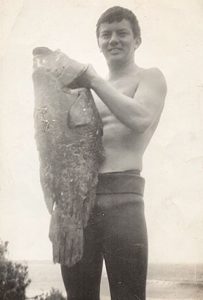
This time I was meeting up with some officials from the fledgling Great Barrier Reef Marine Park Authority and some international scientists conducting coral studies at the Heron Island Research Station, which shares space on the atoll with the international tourist resort.
They invited me on board a vessel engaged in the research by towing a diver with a manta board behind. And, incredible as it may seem with today’s strictly governed workplace safety rules and official red tape, when I mentioned my earlier diving experience, they asked if I would like to try my hand at manta boarding.
Would I? You betcha!
Some basic instructions – press down on the front to dive, push down on the back to rise and let go and rise to the surface if in any difficulty.


Wasn’t long ago they were saying how well the reef had improved. What are they after now. I suspect more taxpayers money !!
It’s always a case of follow the money when it comes to climate change and scientists dependent on government handouts. There is no “scientific consensus”.
Good story John, and yes the GBR is just one of the targets of climate alarmists whose regular predictions of impending doom due to CO2 emissions never eventuate so they just move the goal posts out a few more years. Geological records show sea levels in past eons were both much higher (marine fossils in Central Australia, limestone caves in former coral reefs hundreds of metres above current sea levels) and also much lower – down to the edge of the Continental Shelf off the current coastline.
Coral reefs have thrived in much hotter climates and with CO2 levels 10 times the current historically low levels (in geological terms) of about 0.04 percent but hey, let’s scare the kiddies and the gullible while throwing $$ billions at futile attempts to solve a non-problem.