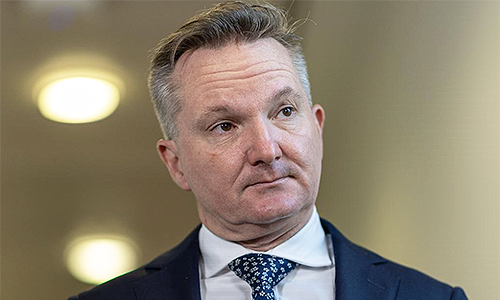





Right-leaning Abelardo de la Espriella has won Colombia’s presidential election and is now working with the United States to wrest control of the country back from narcos. Abelardo de la Espriella, CC0, via Wikimedia Commons.
Following his inauguration on August 7, 2026, Colombia’s right-wing President Abelardo de la Espriella initiated a swift shift toward hardline security policy and a tightened defense alliance with Washington. De la Espriella declared that the option of dialogue with armed groups is completely exhausted, ending peace talks with criminal and guerrilla groups and committing to kinetic operations to restore order.
To strengthen bilateral counternarcotics efforts, Colombia joined the U.S.-led “Shield of the Americas” anti-cartel alliance. In response to this policy pivot, the State Department announced an intended $1 billion security assistance package aimed at boosting Colombian military capabilities, funding joint operations, and disrupting transnational narco-trafficking networks.
Pre-election polling identified security as the dominant issue driving voters. An Invamer survey found 37 percent of voters named security as the top issue facing the country, more than double the next-highest concern. De la Espriella built his campaign around this issue, and the vote functioned as a referendum on hardline tactics: he outperformed nearly every pre-election poll, which had consistently favored Iván Cepeda, the continuity candidate for outgoing President Gustavo Petro’s negotiated-peace approach.
De la Espriella won the first round with 43.7 percent to Cepeda’s 40.9 percent, then the runoff by a razor-thin margin of 49.7 to 48.7 percent, on the highest election turnout since Colombia’s runoff system was established in 1994.
Support for a harder line has continued past the election. Analysis by the Bogota-based Peace and Reconciliation Foundation found de la Espriella’s security-first message resonated most strongly in central Colombia and urban areas near the capital, where voters prioritized crime over other concerns.
At his inauguration, supporters voiced explicit expectations for a crackdown on armed groups, with one Cali resident telling AFP that “this government has a lot to prove” after years of failed peace talks under Petro.
Colombia’s rightward turn is the latest entry in a wave of conservative victories that has swept Latin America since 2023. The trend includes de la Espriella in Colombia, Keiko Fujimori in Peru, José Antonio Kast in Chile, and Laura Fernández in Costa Rica. It builds on earlier wins by Javier Milei in Argentina, José Raúl Mulino in Panama, Daniel Noboa in Ecuador, and Nayib Bukele in El Salvador, along with Rodrigo Paz in Bolivia and Nasry Asfura in Honduras.

A Konrad-Adenauer-Stiftung analysis describes the trend as a possible “conservative turn” of historic proportions. It points to public backlash against economic stagnation, persistent inflation, and organized crime under previous left-leaning administrations as key drivers. Voters have favored hardline security policies, anti-cartel enforcement, and market-oriented reforms.
The clearest common thread across these governments is the militarization of domestic security. The “Bukele model” has spread across the region: states of emergency, mass detentions, and direct military deployment against organized crime. In El Salvador, crime statistics show homicides falling from 53.1 per 100,000 in 2018 to 1.9 per 100,000 in 2024. Foreign Affairs attributes the decline chiefly to the March 2022 state of emergency.
Similar militarized enforcement strategies have been adopted by Noboa in Ecuador, alongside commitments to kinetic operations against narco-traffickers by the incoming administrations in Colombia and Peru. Ecuador represents the most advanced case. On March 6, 2026, U.S. and Ecuadorian forces carried out a joint “lethal kinetic” strike against a narco-trafficking training camp near the Colombian border. U.S. Southern Command confirmed it directed the joint force “to support Ecuadorian forces conducting lethal kinetic operations against Designated Terrorist Organizations within Ecuador.”
Noboa, a close ally of President Trump, has hosted SOUTHCOM’s regional commander in Quito for coordination talks. U.S. forces returned to Ecuadorian soil in December 2025 under what was described as a short-term deployment. The March strike marked the first confirmed U.S. strike action in South America under the anti-cartel campaign.
Peru has followed a parallel track through the Americas Counter-Cartel Coalition, the same framework underlying Shield of the Americas. The State Department’s statement marking President Fujimori’s July 2026 inauguration confirmed the Department of War “intends to scale up counter-narcotics cooperation with Peru.” This includes expanded Justice Department coordination against Tren de Aragua and increased biometrics collection along Peru’s border regions. Peru’s new foreign minister, a former U.S. embassy communications director, has publicly described Washington as a “strategic partner” the government intends to draw closer to.
Combined with Colombia’s pending $1 billion security package and Shield of the Americas membership, the three cases show a consistent regional pattern. Rightward electoral shifts are translating directly into expanded U.S. military and counternarcotics cooperation on the ground.
Apart from physical security, fiscal stabilization has been another feature of these right-leaning governments. It has been most pronounced where governments implemented explicit economic shock therapy. In Argentina, PIIE reports that Milei eliminated a fiscal deficit that had run at roughly 5 percent of GDP and brought down triple-digit inflation within his first year, while Cato Institute analysis documents a return to budget surplus through roughly 30 percent in real spending cuts.
In El Salvador, economic effects have followed a different path tied directly to the security crackdown. Street-level entrepreneurship has emerged as one visible result. A New Humanitarian interview with a Salvadoran researcher describes a new “microeconomy” flourishing in neighborhoods once controlled by gangs, with residents now able to sell goods in the street, an activity gangs had previously forbidden. Separate reporting from Context/Thomson Reuters Foundation documents businesses now able to distribute and sell products across neighborhoods that were previously off-limits under gang territorial control.
The reduction in extortion has also produced measurable cost savings. The Central Bank of El Salvador previously estimated gang activity cost the economy roughly $4 billion annually, or 16 percent of GDP, when factoring in extortion, violence, and lost investment. Extortion payments alone were estimated at around 3 percent of GDP annually before the crackdown. The Economics Observatory’s 2026 assessment states that reduced crime removed a structural constraint on the economy, since firms no longer face the hidden costs of extortion, security, and restricted mobility that had suppressed investment for decades.
Growth data support this pattern. Annual GDP growth averaged around 2.4 percent in the three years before the March 2022 state of exception, compared to roughly 3.15 percent in the years since (2022–2025), based on World Bank and ECLAC data. That marks a sustained improvement over El Salvador’s 2.1 percent average growth rate for 2000–2024. The World Bank attributes part of the gain directly to the security crackdown, stating that reduced crime “boosted investor confidence and removed a key constraint on job creation and prosperity.”
The two big holdouts from this rightward movement are Mexico and Brazil, Latin America’s two largest economies, both still governed by left-leaning administrations. Mexico’s case has drawn particular scrutiny from Washington. Following the February 2025 designation of six Mexican cartels as Foreign Terrorist Organizations, the White House stated that “the Mexican drug-trafficking organizations have an intolerable alliance with the government of Mexico.” Secretary of State Marco Rubio has separately testified that cartels “have basically operational control over huge swaths of the border regions between Mexico and the United States.”
Research on Mexico’s institutions supports concerns about compromised governance. A CSIS analysis of Mexico’s 2024 judicial reform, which replaced appointed judges with popularly elected ones starting in 2025, warns that the change creates a direct opening for criminal organizations to nominate, finance, or manipulate judicial candidates, “enabling malicious actors to secure favorable rulings, obstruct investigations, and deepen impunity.”
An American Enterprise Institute report found that financial accounts frozen by Mexico’s Financial Intelligence Unit for suspected cartel-linked money laundering are frequently unblocked by the Mexican judiciary, undercutting enforcement. A GAN Integrity country risk assessment, citing the Bertelsmann Transformation Index, notes that Mexico’s judiciary has limited independence from the executive at the state level, that state governors accused of corruption have consistently avoided trial, and that local judiciaries in some regions have been directly infiltrated by drug trafficking organizations.
While there is little sign of a change in Mexico’s government, Brazil is not a settled case. Brazilians head to the polls on October 4, 2026, with candidate registration closing August 15 and the official campaign period running through October 3. President Luiz Inácio Lula da Silva, now 80, is seeking an unprecedented fourth term. His usual rival, former President Jair Bolsonaro, is barred from running after Brazil’s top electoral court ruled him ineligible for abusing political power, and he is separately serving a sentence of more than 27 years for plotting a coup following his 2022 election loss. His son, Senator Flávio Bolsonaro, has stepped in as the standard-bearer for the Brazilian right.
Current polling shows a tightening and inconsistent race rather than a comfortable Lula lead. Pollster results have varied significantly by firm: a Quaest/Globo survey conducted August 10–13 put Lula ahead of Flávio Bolsonaro 43 to 40 percent in a simulated runoff, while AtlasIntel/Bloomberg polling showed Bolsonaro actually leading Lula in both March (47.6% to 46.6%) and April (47.8% to 47.5%) before the race shifted back toward Lula in AtlasIntel’s July survey (49.2% to 42.9%).
The spread between pollsters is notable given that AtlasIntel was among the more accurate firms in Brazil’s 2022 election, when Datafolha, IPEC, and Quaest all underestimated Jair Bolsonaro’s actual support in both the first round and the runoff. In a first-round scenario, most pollsters still show Lula leading more comfortably, with the Quaest survey putting him at 38 percent to Bolsonaro’s 31 percent.
Public sentiment on the economy and crime is the source of that tightening. Inflation remains above target, 72 percent of Brazilians report being in debt, and the fiscal deficit runs above 7 percent of GDP.
Lula’s disapproval has reached record levels across his three terms in office, with polls through early 2026 generally showing approval in the low-to-mid 40s against disapproval in the high 40s to mid 50s. Organized crime and police violence remain persistent public concerns alongside the economy, with both major campaigns proposing tougher enforcement while disputing the military’s role in domestic policing.
It seems that even in Latin America, people are tired of crime and a worsening economy. Perhaps the red wave will continue across the continent.
The post Latin America’s Right-Wing Wave Continues as Colombia’s New President Supports U.S. Counternarcotics Operations appeared first on The Gateway Pundit.