


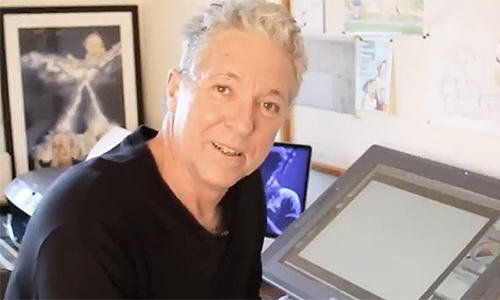

Or, more precisely, it has been a decade since Leak published a cartoon that a cabal of spiteful Leftists deliberately misinterpreted as racist.
Their actions lead to a pile-on that contributed to a heart condition that killed Leak eight months later.
RACE CRIME?
Leak’s crime was to break the cabal’s unwritten but strictly policed rule regarding commentary about race.
He had drawn a cartoon about Aborigines without blaming colonialism for their dysfunction and deprivation. The white supremacist!
Journalists, politicians and commentators from around Australia, including the ABC, responded to the cartoon like Nazi SS officers emerging from a heavy drinking session at the Aryan Arms and finding a lone Jewish busker playing comedy show tunes on an accordion.
What happened next was brutal. Leak was accused of “shitting on an entire community”.
Hundreds of Aboriginal men joined a viral hashtag on Twitter falsely claiming they had been maligned by the cartoon, and pouring scorn on Leak for daring to draw attention to the welfare of Aboriginal children.
News reports repeatedly portrayed Leak as having deliberately slandered every Aboriginal man in the country.
The confusing contradiction of the entire episode is this: Leak, who was a dear friend of mine for 23 years, was the singularly least bigoted person I have ever known. The accusations stung him deeply.
He travelled to Europe as an aspiring young artist in 1978 and returned home in 1982 convinced that Australia’s emerging sophistication, humour, egalitarianism and crudely honest style of intellect made it fertile ground for the world’s next great art movement, and he wanted to be part of it.
He took all of those Australian characteristics seriously, especially egalitarianism.

Although he mixed often with the rich and powerful, he never forgot the names of shop assistants, barmen, colleagues or any other working-class people he regularly encountered.
He was genuinely interested in every person he met. You couldn’t sit down at a bar or restaurant with him without also getting roped into a conversation with the people at the next table.
VITRIOL
Some of Bill’s more influential friends in the media knew that the vitriol directed towards him in 2016 was incorrect, but, being Leftists first and foremost, either added to the pile-on or endorsed it with their silence.
I spent three years writing Leak’s biography, and published it in 2021. It fondly mentions four ABC stars at length – Richard Fidler, Leigh Sales, Phillip Adams and Libbi Gorr – who had all at one stage or another been Leak’s friends.
All four were sent a copy of the book when it came out. Not one mentioned it on their show or invited me in to talk about it.
That’s because Leak, a lifelong libertarian, late in life preferred the company of conservatives, who were more stimulatingly liberal than the censorious Lefties with whom he’d associated for most of his life.
They never forgave him for it, even after he died.
Leak spent much of the last decade of his life fretting about where Australia was heading.
He didn’t shirk from criticising the growing presence and influence of Islam.
He thought climate change alarmism was puerile pessimism plugged by charlatans.
Identity politics was for people who had no identity of their own. And censorship was for people afraid of ideas.
All four of these factors have worsened since his death. Australia is now in rapid decline, just as Leak warned it would be.
If he were alive today, he’d be smirking at his detractors in a way that says “I told you so” without actually uttering a word.
One of my treasures is Bill Leak’s cartoon book – it is a ripper!
The only thing the Abos can do, is take something that is not theirs.