

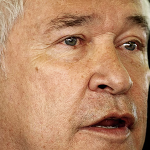




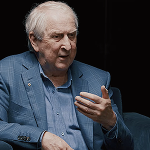
Zack Masternak (public domain) · Number 10 / CC BY 2.0
Polish President Karol Nawrocki aborted a state visit to Senegal mid-flight on Friday and, by 1 a.m. Saturday, had pushed past police and a cordon of judges into Poland’s Constitutional Tribunal. Hours earlier, a judge elected by Prime Minister Donald Tusk’s parliamentary majority, one the president never swore in, had declared herself head of the court, suspended its president and vice president, and brought in riot police to secure the building. The court’s own leadership called it a coup d’état. It happened with Donald Tusk’s justice minister calling in the police and Tusk’s public blessing, and by the plain text of Poland’s Constitution, it was unlawful.
VIDEO: The chief justice’s side cuts through the chains on the Tribunal gate. Watch on X (NEXTA)
Riot police ringing a state institution, an unsworn judge proclaiming herself in charge, the ousted chief justice cutting through the chains on his own court’s gate: it reads like a dispatch from a coup in Africa, not from a NATO ally and EU member state in the heart of Europe.
What this would look like in America
Imagine the President is overseas when a judge, one whose appointment the President never finalized, walks into the Supreme Court and declares herself Chief Justice. She suspends the sitting Chief Justice and his deputy, and police called in by her and the Attorney General ring the building. The Chief Justice finds the gate chained shut, cuts his way onto his own court’s grounds, and is turned back by riot police. That same night, the Attorney General moves to strip the Chief Justice and his deputy of their immunity from prosecution, and hands the paperwork to the judge who just ousted them. The President flies home and has to push past her to get into the building.
Americans would call that a constitutional crisis. Tusk calls it “restoring the rule of law.” Poland’s Constitution says otherwise.
The president Poles chose
Nawrocki is no accidental head of state. Polish voters elected him directly in June 2025, defeating Tusk’s own hand-picked candidate, Warsaw mayor Rafał Trzaskowski, with 50.89% of the vote in the runoff. (CNN via Yahoo)
He is now Poland’s most trusted politician. In September’s CBOS poll, 53% of Poles said they trust him; only 37% said the same of Tusk. (Rzeczpospolita)

The head of state the Polish people elected, and still back, flew home to defend the court. The prime minister whom most Poles distrust stood behind the police who locked it down.
Friday night: the court is seized
On Friday evening, seven judges chosen by the current Sejm entered the Tribunal. Judge Anna Korwin-Piotrowska announced that, as the longest-serving among them, she was now acting head of the court, and suspended Chief Justice Bogdan Święczkowski and his deputy, Bartłomiej Sochański, for one month. Police removed the court’s own security and deployed riot units, citing letters from Korwin-Piotrowska and from Prosecutor General Waldemar Żurek, who is also Tusk’s justice minister. (Notes from Poland, GB News)
That same evening, Żurek filed motions to strip Święczkowski and Sochański of their immunity from prosecution, and delivered them to the court’s “longest-serving judge”: Korwin-Piotrowska. (Notes from Poland)
Święczkowski arrived to find the gate chained shut behind a police cordon. PiS MP Mariusz Gosek went at the chain with bolt cutters, then a protester who said he was a locksmith cut through the fastening with a power tool, sparks flying, on Święczkowski’s orders. The chief justice walked up to the riot line holding his official ID and demanded to be let into his own court. Refused, he told the crowd they would not fight the police and promised to return with the president. (natemat.pl, Bankier.pl)
Hundreds of protesters gathered through the night, some chanting “Tusk traitor,” as Jarosław Kaczyński called it a coup against the Tribunal. Former Justice Minister Zbigniew Ziobro called it “a blatant, criminal attack on the constitutional order.” Police detained three people after demonstrators breached the fence. U.S. Ambassador Tom Rose called the events “very serious indeed.” (RTÉ, Yahoo News/AP, Fox News)
The president turns his plane around
Nawrocki was over southern Spain when the news broke. “At such a moment, the President must be in Poland,” he posted on X. Around 1 a.m., with Supreme Court First President Zbigniew Kapiński at his side, he arrived at the Tribunal escorting Sochański. Police barred his way but did not stop the head of state, and video shows him pushing past Korwin-Piotrowska and Judge Krystian Markiewicz at the door. (Anadolu, bne IntelliNews)
Inside, the cameras kept rolling. “We are judges of the Constitutional Tribunal,” Korwin-Piotrowska told him. “You are not judges of the Constitutional Tribunal,” Nawrocki answered.
VIDEO: “You are not judges of the Constitutional Tribunal.” Watch on X (Eric Daugherty)
Tusk’s camp tells it differently. Maciej Berek, a close Tusk ally also elected to the Tribunal, claimed the president “physically attacked” the judges, and Żurek called for prosecutors to examine his conduct. (Newsy Today, Saudi Gazette)
At dawn, Nawrocki declared that the constitutional order had been violated by “a forcible takeover of a constitutional body of the state.” He demanded that the forces the government had sent leave the Tribunal and summoned party leaders to emergency talks, citing a threat to Poland’s internal security. (Türkiye Today)
A judge the president never swore in
Under Article 4 of Poland’s Act on the Status of Constitutional Tribunal Judges, new judges must take their oath before the President. In March, the Sejm elected six. Nawrocki accepted two and refused four, Korwin-Piotrowska among them. Parliament swore them in at its own ceremony on April 9, which the president’s office says has no legal basis. (Greek City Times, Euronews)
You wouldn’t learn that from the Associated Press. AP reported only that the Tribunal’s website “announced the suspension” of the court’s president, as if the court itself had acted. It never says who issued the order, never names Korwin-Piotrowska, never mentions the refused oath, and leaves out the Tribunal’s statement that its website had been seized. What AP does give readers is the government’s claim that Święczkowski “repeatedly broke the law,” with no specifics and no mention that no court has found him guilty of anything. (Yahoo News/AP)
Why the court matters to the presidency
Whoever controls the Tribunal referees every clash between the president and the government, from vetoes to pardons to appointments. It settles disputes over powers between the state’s constitutional bodies. (Constitution, Article 189)
It also holds a key to the presidency itself. Under Article 131 of the Constitution, if the president cannot notify the Speaker of the Sejm that he is unable to serve, the Tribunal, at the Speaker’s request, decides whether he is impeded, and the Speaker takes over his duties. The Speaker is a member of Tusk’s coalition. (Adam Mickiewicz University)
PiS MEP Dominik Tarczyński argues in a video circulating on X that the coalition also wants a friendly court to clear the way for replacing the złoty with the euro, a change that would require amending the Constitution. (Brussels Signal)
A familiar playbook
Tusk has done this before. He promised on the campaign trail to dismantle state television and said public media in its current form did not deserve taxpayer money. (Financial Times via Today in the Markets) Within days of taking office in December 2023, his Culture Minister, Bartłomiej Sienkiewicz, fired the leadership of public broadcaster TVP, Polish Radio and the PAP news agency and installed new management the same day. TVP Info went dark minutes later, and Tusk’s Civic Platform celebrated on X: “The end of TVPiS.” (TVN24)
Dozens of reporters were fired, and when President Andrzej Duda vetoed the funding, the government put the broadcasters into liquidation to keep its managers in place. Morawiecki and Kaczyński called that a coup, too. (NPR/GPB, Notes from Poland)
Tusk is breaking Poland’s Constitution
Tusk defended Friday’s move on X, saying that after years of PiS lawlessness, restoring the rule of law requires decisive action. “There is no other way,” he wrote. In August he had promised to restaff the court, admitting his methods might not be to everyone’s liking. (Yahoo News/AP, Washington Times/AP)
That defense collapses the moment you open Poland’s Constitution. Tusk is not restoring the rule of law. He is breaking it, on four counts.
The Tribunal’s leadership is the President’s to appoint. Article 194 gives the President of the Republic the power to appoint the Tribunal’s president and vice president. It gives no single judge the power to depose them, least of all a judge the head of state never swore in. (Constitution, Chapter VIII)
The oath is the law. Statute requires new Tribunal judges to swear their oath before the President, and parliament cannot rewrite that by staging its own ceremony. Even Poland’s human rights commissioner, Marcin Wiącek, no PiS loyalist, has said the law requires the president to swear in Tribunal judges. (Notes from Poland)
The Tribunal’s rulings are binding. Article 190 makes its judgments final and universally binding, and requires them to be published immediately. Tusk’s government has refused to publish them since 2024, including the ruling that the president is under no obligation to swear in parliament’s picks. (Notes from Poland, Parapolitika)
The government must act within the law. Article 7 binds every public authority to act on the basis of and within the limits of the law. A government that disagrees with a court can legislate or wait for terms to expire. It cannot send riot police to install its own leadership.
Tusk’s camp leans heavily on an opinion from the Venice Commission, an advisory body in Strasbourg that says the president’s role in the oath should be ceremonial. (Euronews) Its opinions bind no one in Poland; the Polish Constitution does. By that text, what happened on Friday night was not a restoration of the rule of law. It was a government seizing a court it could not lawfully control, and Donald Tusk owns every step of it: the judges his majority installed without the president’s oath, the police his justice minister summoned, and the takeover he defended within hours.
Nawrocki’s emergency talks with party leaders began Saturday afternoon, and the first through the door came from Tusk’s own coalition: Deputy Prime Minister Władysław Kosiniak-Kamysz and Szymon Hołownia, who said the court needed fixing but force was the wrong way to do it. (TVN24, Goniec)
The talks were still underway at the time of publication. For now, Poland has two rival groups each claiming to be its highest court, police holding the building, and a year until the parliamentary elections that will decide who keeps it.
The post ‘Coup’ at Poland’s Top Court: How President Nawrocki Forced His Way In After Tusk Attempted to Seize Control appeared first on The Gateway Pundit.