




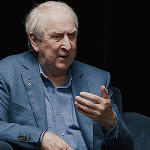


The real pianist objected, at which point the interloper threatened to punch him.
I guess the pianist should be grateful he wasn’t performing in Melbourne, where such hostile encounters invariably end with a victim recovering from machete wounds in hospital.
GANG SIGNS
Meanwhile, the perp walks from a Magistrates Court smiling and flashing gang signs at TV cameras.
The clip generated considerable interest among the dwindling number of Australians who can see the rapid decline of civility and sophistication in their country.
These are the few who forlornly cling to the hope that the place might one day return to what it was before Anthony Albanese and Tony Burke transformed it into an arrival terminal for Third World grifters and violent, frustrated pianists.
The clip ironically reminded me of the piano I walk past every day in the foyer of the office block in Bangkok where I rent a shared work space.
Random passers-by constantly sit down and have a tinker, as this man did after plonking his plastic shopping bag on the piano next to the phone from which he’s reading sheet music.
These pedestrian-looking musicians all play classical compositions, but don’t fit a stereotype.
They come in all shapes and sizes. One of them is a boy aged about 12 who visits after school with his Chinese tiger mum to practise what – to my untrained ears – could be Mozart, Bach or Liszt. I’m not sure.
I do know, though, that he’s not playing Khe Sanh.
Sociologists have known since at least the mid 20th century that the more homogenous a group, the higher the level of trust within it. The group doesn’t need to be ethnic, but ethnicity certainly helps.

The Australia in which I grew up was probably one of the highest trust societies in recent history. It wasn’t perfect, but it was enormously better than the hostile and increasingly dysfunctional multicultural dump it has become.
Now a busker can’t even trust random passers-by not to reach over his shoulder, bash out an improvised version of Chopsticks and threaten him with violence if he objects.
SOCIAL TRUST
You don’t realise how corrosive this is to your state of mind until you move to a place like Bangkok, where social trust is high.
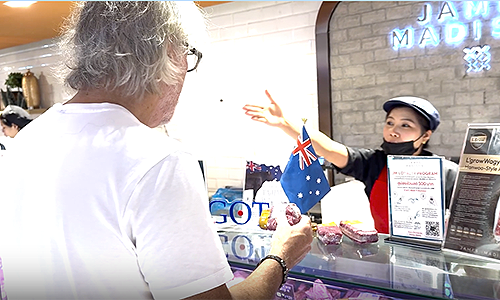
I recently purchased a piece of prime Australian wagyu beef at a Bangkok supermarket.
The key part of this transaction is that the money changes hands a fair distance from where I obtain the goods.
I am told to walk across a crowded, open food court with it in my hand. The whole system relies on the assumption that nobody will take advantage of the clear opportunity to just pocket the prize cut and walk out.
It’s difficult to describe how liberating this feeling of trust is for someone who had, back home, become accustomed to buying even ordinary cuts of beef in security packaging.
It’s not just the supermarket that assumes this level of trust. Everyone does.
If you want to save a table in a crowded food hall in Bangkok, the convention is that you leave some valuables to mark your spot.
Recently I saw three laptops and a briefcase colonising a table awaiting their owners to return with dinner. Needless to say, nobody gave the valuables a second glance.
There is a hidden financial benefit to this.


Dear Leigh, I’m sure your namesake, the US made Barret .50 caliber has blown the heads of more than a few Gazans but the ongoing atrocity and genocide appear to have missed your brain. Now a car park, the 70,000 odd tonnes of bombs made their end and removal finally a possibility. A cause for great celebration for you no doubt. The often announced 70,000 dead is more likely 500,000 but that truth will likely never reach our shores as its all Israeli propaganda down under. What turned my head finally was hearing how the IDF blocked the delivery of donated Ozi wheelchairs for Gazan children. It is quite a crime I suppose causing the most amputated children in any war so they want to keep it quite like all the other murders, rapes, tortures and killings. All jews are now tainted by Gaza after the true face of Zionism was revealed. The new Oz hate laws wont protect criticism of Zionism. The false flag of 7/10 ‘Hannibal directive’ was merely to justify it and enrage the IDF to unprecedented levels of barbarism and mass murder. I can only imagine you have no soul or any compassion not to see the IDF crimes or just the usual liar with deceit for the ‘Goy’. The Oz public are all well aware of your crimes which should haunt you all to your graves, they are that bad.
Fred, have you done a Sall Grover? Not that I blame her or you. There is an extraordinary battle being waged over Australia, one of moral and spiritual values and I and many others are not giving up. Faith is that which is hoped for, not that which isseen. Australia’s legacy is about the Jews and Israel through whom all the nations of the earth will be blessed. In WW1 Australia unwittingly played a pivotal role in the winning the battle of Beersheba bringing about the formation of the modern state of Israel. In WW2 Australian armed forces prevented Rommel from reaching Jerusalem where he planned to exterminate half a million Jews. Australia as we all know has been a refuge and a haven for Jews after WW2. Australia has been under siege since covid but the tide is turning, watch and see history in the making.
Lazy Australians looking for a free ride
The Australian black market only exists because the criminals care more for us than our government.