

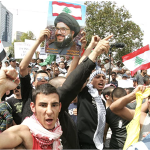




Houthi military spokesman Yahya Saree said the group would strike Saudi Red Sea ports if the Saudi-led coalition attacked Hodeidah. He also said the Houthis would target Saudi Arabia’s Al-Shuqaiq power station and warned airlines of military activity in Saudi airspace. Photo courtesy of Roya News via Instagram.
On Nov. 20, Houthi military spokesman Yahya Saree threatened to attack every Saudi port on the Red Sea if the Saudi-led coalition struck the Houthi-held port of Hodeidah. “Jeddah port and all ports of the Saudi enemy on the Red Sea coast will be a target for our forces,” Saree posted on X.
He urged port workers and nearby residents to evacuate and told shipping companies to remove their vessels. The threat followed a coalition call for civilians to evacuate areas around Hodeidah port.
Saree said the Al-Shuqaiq power station in southwestern Saudi Arabia would become a “legitimate target” within hours. He said the threat was a response to strikes on power stations in Saada and Mokha that Houthi-run Al-Masirah TV attributed to Saudi aircraft. He also declared Riyadh’s financial center a military target and told people in the area to leave. The Houthis warned airlines to expect military activity in Saudi airspace in the coming hours, with exceptions for Mecca and Medina.
The coalition went ahead with the strikes. Coalition spokesman Maj. Gen. Turki Al-Malki said its forces struck Houthi missile and drone capabilities in Sanaa and targeted operations the Houthis used to smuggle weapons, including ballistic missiles, through Hodeidah port. Saree then claimed attacks on the Al-Shuqaiq power station and the port of Jazan. He vowed to retaliate against Saudi ports and power stations if the coalition struck Hodeidah port or Houthi power stations again.
That evening, the coalition said its air defenses intercepted two ballistic missiles fired at the Jazan region and that debris fell in the Al-Shuqaiq area. Shortly after 2 a.m. on Nov. 21, Al-Malki said air defenses intercepted three ballistic missiles launched toward Riyadh. On Nov. 23, an air raid on a telecommunications facility in Hodeidah killed eight people and injured 17, according to Houthi-run health authorities.
The Houthis had already threatened Saudi shipping in July. On July 20, Saree announced an immediate maritime embargo against Saudi Arabia. That day, the Houthi-run Humanitarian Operations Coordination Center emailed shipping companies, saying vessels were barred from loading or unloading cargo at Saudi ports. War-risk insurance premiums rose from about 0.3% of a ship’s value to around 0.75%. Saudi Arabia’s Red Sea ports handle most of the kingdom’s oil exports. Since the U.S.-Israeli war with Iran began on Feb. 28, Saudi Arabia has shifted more than 70% of its crude exports through Yanbu, which ships about 4.5 million barrels per day.

The warnings to airlines date back to July 13, when Saree claimed a ballistic missile attack on Abha airport and warned airlines to stay out of Saudi airspace “until the blockade on Sanaa International Airport is lifted.” The Coordination Center warned airlines operating in Saudi airspace on Oct. 5.
Saree claimed a direct missile hit on King Khalid International Airport in Riyadh on Nov. 4. He warned travelers, airlines and their staff that Saudi airspace was unsafe because of the risk of Houthi attacks.
President Donald Trump reportedly called off planned strikes against the Houthis at the last minute in September after the group advanced to the Bab el-Mandeb Strait. He had decided to strike hours earlier, after speaking with Saudi Crown Prince Mohammed bin Salman. Trump said the United States had held discussions with the group. “The Houthis called us, and they don’t want to fight with us,” he said.
Mohammed al-Bukhaiti, a member of the Houthi political bureau, said the group had told Washington it would target only Saudi Arabia in the strait. He said the group’s operations were intended to ensure freedom of navigation and that attacks on Saudi Arabia would continue until Riyadh lifted its blockade of Houthi-held areas and allowed vessels to reach the Red Sea ports the group controls.
Al-Bukhaiti said the Houthis could fight on several fronts if another country joined Saudi Arabia’s campaign. A Houthi military adviser warned on Sept. 23 that the group would target U.S. interests in the Middle East if Washington intervened on Saudi Arabia’s behalf or tried to reopen the strait. As Saudi Arabia was reportedly seeking U.S. help on Oct. 12, al-Bukhaiti warned of a “swift and painful response” targeting the United States and its interests in the region.
The Houthis also threatened Pakistan and Türkiye, Saudi Arabia’s partners in the Mecca Joint Defense Agreement. Al-Bukhaiti warned in September that the Houthis would strike both countries “with an iron fist” if they intervened in Yemen.
Egypt’s parliament voted on Oct. 27 to authorize President Abdel Fattah el-Sisi to take “all necessary measures” to help Saudi Arabia. Mohammed Ali al-Houthi, a member of the group’s political bureau, called the vote a declaration of war on Yemen. He said Egypt was being drawn into war “as they were lured in the sixties” and urged the other members of the Mecca pact to leave the alliance.
The post Houthis Threaten Saudi Ports and Power Plants, Warn Airlines Flying in Saudi Airspace appeared first on The Gateway Pundit.