






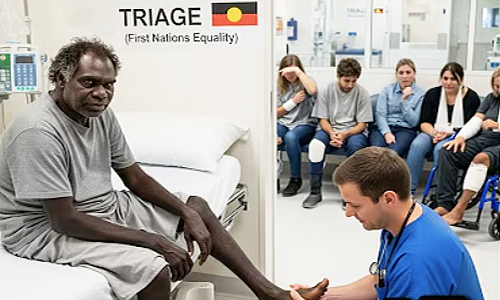

Recent reports revealed that the inner-city hospital issued a staff directive in April 2024 to fast-track care for all Indigenous patients presented to the emergency department.
The hospital says the changes were introduced to address gaps in Indigenous treatments, but Ms Crozier says triaging should be based on “health and medical needs, not based on the colour of your skin or race”.
RISK
“Triaging is about risk assessment and decisions have to be made very quickly,” she told The Epoch Times.
“It should be made on the health needs of the individual that presents.
“Of course, Indigenous status needs to be a part of that risk assessment, but it shouldn’t be the sole criteria that somebody is seen based on the colour of their skin and race.”

St Vincent’s was nominated for the Victorian Public Healthcare Award specifically for the initiative, which noted: “First Nations patients are now seen more promptly than non-Indigenous patients.”
It’s not the first time the hospital has been awarded for such measures.
In 2022, the hospital introduced a range of measures to make the emergency department more “culturally safe”, including adding Indigenous flags that would pop up when a patient’s name was entered in, a prominent Indigenous “welcome sign”, and an Acknowledgement of Country on display.
The measures, which also included fast-tracking treatment of Indigenous patients, won the hospital the Al Spilman award for Culturally Safe Emergency Departments.
Ms Crozier said the legislated directive to prioritise race was indicative of what Victorians could come to expect if the Indigenous Treaty and “Voice” are fully implemented.
“We don’t want more division in this State, and what we’ve seen through this policy, which the government has endorsed by the awards that have been announced … shows the extent of the division and how everyday Victorians represent to emergency departments will be missing out on care,” she said.
She said St Vincent’s was falling behind with its response time.


Racism pure and simple, call it out…