






Indeed, while most of the overlap relates to long-standing One Nation policies, few – if any – of these have previously been on the Coalition agenda.
This points to One Nation not being merely, as is so often claimed, a Party of complaint. One Nation is, in fact, clearly a policy leader.
KEY SIMILARITIES & DISTINCTIONS
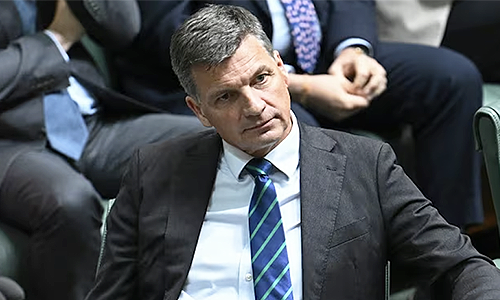
• The Housing-Migration Link: The core of Angus Taylor’s speech – that Australia should “only bring in as many people as it can house” – is a rhetorical and policy mirror of One Nation’s “Clean up our own backyard first” slogan. While One Nation uses a hard number (130,000), Taylor’s formulaic approach effectively achieves a similarly drastic reduction.
• Welfare Protectionism: Both Parties are now aligned on the idea that welfare should be a “benefit of citizenship” rather than a right for permanent residents. Taylor’s proposal to strip 17 specific payments from non-citizens is a more granular version of Pauline Hanson’s long-standing demand for a “migrant waiting period”. She also proposes doubling the surprisingly short period currently required for naturalisation – a position originally detailed in a 2018 bill introduced into Parliament.
• Energy Sovereignty: Taylor’s vow to extend the life of coal-fired power stations reflects One Nation’s “Energy Security” platform. The Coalition, however, still technically operates within a framework of eventual transition (albeit delayed), whereas One Nation explicitly calls for the repeal of all legislated net-zero targets and a total withdrawal from the Paris Agreement.

• Tactical Shift: Barnaby Joyce and media commentators have explicitly stated that Taylor was “reading off One Nation’s script”. This shift is widely seen as a tactical move to reclaim voters in regional seats where One Nation has seen a surge in support. While the Coalition’s proposals are framed in the language of “economic common sense” and “generational reform”, the structural mechanics – cutting migration to historic lows and prioritising domestic welfare for citizens – are remarkably close to the platform One Nation has long campaigned on.
On migration, One Nation has a number of supporting policies, including the aforementioned naturalisation reform introduced in 2018, which would extend the residency requirement from four to eight years while making the application process significantly more rigorous.
THE HANSON CRITIQUE
In her independent response to the Budget, Senator Pauline Hanson offered a sharper structural critique:
• Migration & Infrastructure: She linked the housing crisis directly to high migration levels, stating that no amount of tax reform would work while population growth continues to outpace housing and hospital capacity.
• Regional Neglect: Senator Hanson accused the government of ignoring the “realities faced by agricultural communities” in favour of inner-city political priorities.
THE ONE NATION ALTERNATIVE
Senator Hanson campaigned for a $90b reduction in “government waste” to be redirected toward nation-building. Her specific proposals included:
• Abolishing Agencies: Scrapping the Department of Climate Change and the National Indigenous Australians Agency (NIAA).
• Media Reform: Defunding SBS entirely and restricting the ABC to regional and rural areas only, forcing it to rely on advertising and subscriptions.
• Infrastructure Investment: Investing in dams, railways and nation-building projects to stimulate long-term wealth.
BRADFIELD PLAN
A cornerstone of One Nation’s long-term vision – which Senator Hanson reaffirmed in her response – is the delivery of the Bradfield Scheme (or a modern variant of it).
Originally proposed in 1938 by Dr John Bradfield (the engineer behind the Sydney Harbour Bridge), it is a massive water diversion project designed to drought-proof the Australian interior.
The core idea is to capture water from high-rainfall tropical rivers of North Queensland (such as the Tully, Herbert and Burdekin) and divert it across the Great Dividing Range to flow into the western river systems and eventually toward Lake Eyre.
Under One Nation’s current advocacy, the plan would be delivered through:
• Large-scale Infrastructure: The construction of massive dams (such as an expanded Hell’s Gate Dam) and a series of gravity-fed tunnels or pumped pipelines to move water across the mountain range.
• Agricultural Expansion: The water would be used to irrigate roughly 80,000 square kilometres of “blacksoil plains” in western Queensland, potentially turning the region into a major food production hub.
• Hydro-electric Power: Modern versions of the plan propose using the water flow to generate thousands of megawatts of “clean, green” energy through hydro-plants.
• Funding: One Nation proposes funding such projects by redirecting savings from abolished government departments and withdrawing from international climate agreements like the Paris Accord.
With polling now suggesting that One Nation is the most popular Party in the country, the commentariat and the Coalition alike must take the Party seriously.
The continuous refrain that One Nation is a Party of complaint but not of policy is demonstrably false.
Is it not about time the commentariat abandoned what is, in Australian terms, a furphy?
One Nation has clearly offered leadership on policy, especially to those Menzies called the “forgotten people”, those who are neither unionists nor massively wealthy. That is a fact.

Planning a whole home remodel can significantly enhance your living space, but understanding the costs involved is crucial for effective budgeting. The total expense varies widely based on factors like square footage, material quality, and labor rates in your area. On average, homeowners may spend between $100 to $200 per square foot, though high-end projects can exceed this range. For a more precise estimate tailored to your location, researching local trends is essential. In cities like Seattle, for instance, the [url=https://usawire.com/whole-home-remodel-cost-seattle/]whole home remodel cost[/url] may differ due to regional pricing and demand. Consulting with professionals ensures you account for all variables, from permits to unexpected structural adjustments.
Paris 2015/16 Agreement was about emissions reduction, Glasgow 2021 was when UNIPCC introduced net zero emissions however Australia (Morrison Government) did not “sign up to” Glasgow and with net zero now off the Coalition policy list there is no good reason to go through the flack from formally withdrawing from the Paris Agreement for reasons explained at this link …
https://climate.mit.edu/ask-mit/how-are-countries-held-accountable-under-paris-agreement
One Nation now says Angus Taylor has adopted One Nation Immigration numbers and policy?
ABS statistics based Immigration average per year from 2000 to 2025 are;
Coalition 2000-2007 = 125,800 intake
Labor 2007-2013 = 259,000 intake
Coalition 2013-2022 = 168,700 intake
Labor 2022-2025 = 424,300 intake
Seriously, we are all sick and tired of political promises. Libs have to stop their EGO getting the better of them, move forward and combine with One Nation. Is not the whole point to get rid of Labor, really see the writing on the wall and fight together instead of copying One Nation`s policies for yourselves, we can all see what you are doing. I was once a Liberal supporter but recently pulled away as many more have. STOP the Politics and just be honest with yourselves, combine and fight the good fight for our beautiful country please!!
Cooperate I can agree with, combine I cannot agree with and for many reasons including most recently the Federal 2025 election, not one (1) One Nation candidate elected anywhere nationally to the House of Representatives, only four (4) One Nation senators after 2025 election, Total One Nation = 4.
By comparison Labor partner Greens have eleven (11) Senators and one (1) House of Representatives MP.
One Nation started in home State of Queensland in 1997 and now 29 years and achieved what?
In 2026 based on disunity in Liberals SA and very new Leader and One Nation for the first time gained seats there but Labor was returned to government. Next a VIC State by election and again disunity in Liberal ranks and State Executive however the executive was being changed a the Parliamentary Leader campaigned very well and the candidate won the election, Teal masquerading as Independent second, One Nation lost.
First ever One Nation elected House of Representatives MP via Federal by election recently in 2026, another example of Liberal disunity and sitting MP resigned angering constituents and also had caused friction between Liberal and National Coalition partners adding to the voter bad image. The National candidate for the first time in many terms (Farrer was a National seat earlier) gained about 10% of the vote. One Nation did well, Teal Independent second.
Note no Labor candidate VIC or Federal by elections, but Union GetUp supported Teal brand.
Last Saturday QLD State by election Stafford, Labor held seat retained, but Labor lost more primary votes and LNP QLD Government candidate gained those votes Labor lost, and Labor won because of preferences distribution. No One Nation candidate to support LNP candidate. They did have a candidate at the last State general election. When asked One Nation’s Chief of Staff admitted the decision was based on not wasting resources. In other words no opportunity to take advantage of Coalition that time.
I am of course well aware, and looking behind the polling samples results, that One Nation is in recent times being viewed as an alternative Conservative Party and we all understand that, and reasons why voters have been disappointed with Labor, and also with Coalition but when propaganda is fact checked as I have done it is revealed that many voter perceptions are propaganda from Labor and others on the left.
* COVID pandemic period, State Governments responsible for 95% of public health, emergency powers and restrictions implemented etc, state taxes funded including GST shared. Federal economic stimulus supporting businesses and employees as state economies suffered. Supply of pharmaceutical products, etc. Labor Premiers notably Labor VIC and QLD used COVID to undermine Morrison Government by blaming them for State responsibilities and actions.
* Earlier 2019 bushfires, Prime Minister on leave with family in Hawaii, no acknowledgement of Deputy PM on duty. Or that State Premiers and State Emergency Services are responsible for natural disaster management.
Even way back to Howard Government there are various now urban myths about what they allegedly got wrong, even denial about their excellent financial and economic management. Abbott Government announced their 2014/15 budget repair Budget and based on independent auditing report of Labor last 2013/14 Budget of black holes and inaccurate accounting figures. Labor and left leaning media attacked that Abbott-Hockey Budget as if the repairs were unwarranted, the combined debt exceeded $400 billion from Labor including their gross debt that exceeded their own debt ceiling, they under estimated their budget deficit, and funds borrowed to pay for high expense budget items like NDIS and Gonski Education Grants to States combined added Labor total debt creation.
The Turnbull three (3) years were not all bad decisions but did reflect the LINO (Liberal In Name Only) left faction being Labor like. But like more sensible Labor centre left than the Albanese and present VIC Labor far left of centre.
It is minor party in elected number that must cooperate with the major Coalition partners Opposition.
Good to hear about the Bradfield Plan. In addition to those dot-points, and infinitely cheaper and more directed to specific agricultural areas is this: a system of smaller localised/regional dams that can service local properties. Contiguous properties can allocate areas of their farms to a mini-dam that could service several nearby properties, subject to the usual engineering and environmental constraints. Even on a particular property, high rainfall events go to waste when Farmer Brown has no dam capacity on his farm to top up the troughs and irrigation system. To put in a few “scrape-up” mini-dams where two hills can provide a feed of water to a dam wall scraped up by tractor blade is a bureaucratic nightmare. Spotter planes will monitor such activity and clamp down on Farmer Brown! Yes, downstream farms cannot be starved of their fair entitlement to run-off water, but water management in co-operation with a more positive minded Department of Agriculture can provide a lot more micro solutions for water storage and drought resilience.
It is a good plan, but also the Abbott Opposition plan for Northern Australia extending the existing Old River Irrigation Area, dam and nearby town Kununurra WA across through NT to NQ utilising the major rivers as with Ord River Dam.
PM Abbott and LNP Premier Newman managed to overturn the UN registered “wild rivers” QLD Labor legislation to allow development for the irrigation extended area plan. CSIRO identified land there equivalent to the area of Western Europe as suitable for many crops for export markets and local.
The dams could have hydro electric power stations, China has built many river based hydro electric schemes to add to the mix of coal, gas and nuclear power station generators there.
However, the plan of Abbott Government disappeared after PM Turnbull was appointed late 2015