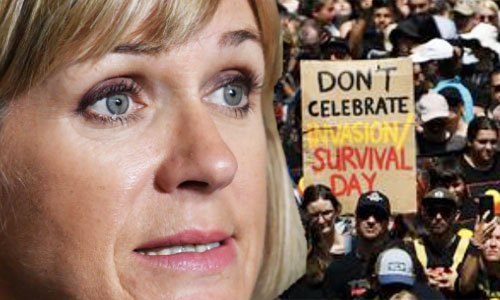




British Home Secretary Shabana Mahmood has made an extraordinary admission about Britain’s Channel migration system, saying “you can almost guarantee that every woman” waiting in northern France has “probably been raped along the journey,” according to reports from the British press.
Mahmood then delivered the line that will reverberate through Britain’s immigration debate: “We’re not in control of this border.” The Home Secretary admitted that criminal trafficking organizations effectively determine which migrants reach northern France and ultimately board dinghies for Britain.
“The sifting of the people that end up in the north of France and are about to get on a dinghy is done by criminal gangs who are also, by the way, people traffickers,” she said. Mahmood added that male migrants are also subjected to abuse, intimidation and threats along the journey.
Her description presents a brutal contradiction at the heart of the Channel system: Britain says it controls immigration, yet organized smugglers can still decide who boards boats and reaches British waters. For immigration restrictionists and sovereigntists, Mahmood’s own language amounts to unusually direct confirmation of their argument that border sovereignty remains compromised.
Mahmood herself argued that such a system cannot determine who eventually settles in Britain. “That is not the model that should decide whether somebody gets to come to the UK, make this their place of sanctuary and ultimately become one of us,” she said.
Her comments came as another large migrant boat reached British waters off Hampshire, bringing the border crisis to Gosport rather than the usual landing points farther east. French rescue vessels shadowed the dinghy before two RNLI boats met it in British waters and brought 149 migrants ashore.
The Home Office confirmed that those aboard would be transported to Kent for processing and undergo health, biometric and security checks. Government officials said contingency arrangements had been activated so the arrivals could be “securely disembarked, checked and processed.”
Massive police operation in Gosport, UK last night after the authorities brought in another 150 illegal migrants who arrived on dinghies

4 buses transported the migrants from the boats to their hotels while police forces held protesters back from the area https://t.co/jhbOMfEyVa
— Visegrád 24 (@visegrad24) October 5, 2026
The arrival triggered a large anti-migration demonstration near Haslar Marina, where roughly 350 people gathered as the operation unfolded. Police later arrested 12 people on suspicion of offences including assaulting an officer, criminal damage and drunken disorder.
Protesters shouted against the arrival while flares and scuffles broke out, although police said much of the gathering remained peaceful. The scenes illustrated how illegal Channel crossings have moved beyond Westminster statistics and become a combustible public-order issue in coastal communities.
The core sovereigntist argument remains that a functioning state must decide who enters its territory rather than allowing that decision to emerge from a smuggling network and a rescue operation.
The human cost of the Channel route remains severe regardless of political position. On Monday, two men died attempting to cross from Berck in northern France, while other migrants suffered injuries linked to fuel exposure during the attempted journey.
Mahmood’s claim about widespread rape places another grim layer over that reality. It suggests that by the time some women reach northern France, they may already have passed through a transnational trafficking economy in which sexual exploitation, coercion and violence accompany the promise of illegal entry into Britain.
The Refugee Council seized on that part of Mahmood’s argument from a different direction. Its director Imran Hussain said the answer should include more safe and legal routes so women fleeing war and persecution are not forced into the hands of traffickers in the first place.
That is precisely where Britain’s immigration debate divides. Refugee advocates argue that additional legal pathways would undermine smugglers, while restrictionists counter that creating more admission routes risks expanding migration rather than making illegal crossings ineffective.
The government’s recently expired agreement with France has added to doubts about whether incremental cross-Channel arrangements can solve the problem. The “one in, one out” scheme ended on October 1 after more than a year in operation, having exchanged roughly 1,500 asylum seekers while more than 40,000 people crossed the Channel during the same period.
Under that model, Britain could return an asylum seeker to France in exchange for admitting another person legally from France. In practice, the scheme remained far smaller than the overall flow, while French officials increasingly wanted migration enforcement handled on a wider European basis.
That experience, to conservative, anti-globalists, and sovereignty-minded critics, strengthens the argument that Britain cannot subcontract border control to agreements dependent on Paris, Brussels or broader European consent. They contend that the decisive test is whether unauthorized arrival actually results in removal rather than eventual residence after processing.
The political pressure is unlikely to ease simply because crossings have fallen from last year’s levels. Sky News reported 19,451 Channel crossings so far in 2026, down 43% from the corresponding point in 2025 but still representing thousands of people reaching Britain through an unauthorized route.
Mahmood’s interview also exposed another politically awkward divide within the Home Secretary’s own worldview. She described herself as having long belonged to the “pro-Palestinian cause” and admitted feeling “very uncomfortable” watching some Palestine Action supporters arrested under terrorism legislation.
Merseyside Police said officers dealt with 161 people at a Defend Our Juries demonstration during Labour’s Liverpool conference. Eighty-two were arrested on suspicion of displaying or carrying material supporting the proscribed Palestine Action organization, while another 79 were reported for summons.
Mahmood said some of those demonstrators were people she recognized from pro-Palestinian activism and acknowledged discomfort at seeing them caught by Section 13 of the Terrorism Act. She nevertheless defended enforcing the law, saying principles must still be applied when doing so conflicts with one’s personal sympathies.
For the government, the policy challenge is therefore becoming brutally simple even if the politics are not: dismantle trafficking networks, protect abused migrants, determine asylum claims, remove people without a right to remain and restore confidence that entry into Britain is controlled by the British state. The present system remains vulnerable to the charge that traffickers set the journey in motion while British authorities inherit the consequences once boats reach the Channel.
Mahmood may have intended her remarks primarily as an indictment of smugglers and the violence inflicted on migrants, but her most politically damaging sentence was broader. When the Home Secretary herself says “we’re not in control of this border,” critics of Britain’s immigration settlement do not need to invent a sovereignty crisis—the minister responsible for the border has described one in her own words.
The post British Home Secretary: Nearly All Women Trying to Reach the UK by Boat Are Raped on the Journey appeared first on The Gateway Pundit.