




Military service in Siad Barre’s army did not automatically invalidate Nur Omar Mohamed’s refugee status in the United States. However, proven complicity in crimes against humanity or deliberate misrepresentation of material facts on his immigration forms could raise legal questions about his admission.
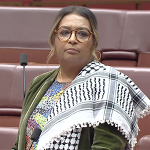
Federal agents searched Rep. Ilhan Omar’s Washington-area home on Monday. The Justice Department said Homeland Security Investigations agents executed a judicially authorized search warrant, adding that “this enforcement action is part of an ongoing federal criminal investigation.”
Sources told Fox News Digital the probe centers on immigration paperwork completed by Omar’s late father, Nur Omar Mohamed, who served for more than two decades as an officer in Somali dictator Siad Barre’s army.
In March 2026, Vice President JD Vance said he believed Omar had committed immigration fraud. Omar has denied the accusations, and her chief of staff, Connor McNutt, called the claim a “ridiculous lie.”
Mohamed was born in Bandarbeyla, a coastal town in northeastern Somalia, and grew up in Mogadishu, according to his 2020 Sahan Journal obituary. A former army comrade who had known him since the early 1970s said he joined the Somali National Army after military training in Russia and rose to colonel. During the 1977–1978 war with Ethiopia, he commanded a regiment and was recognized for his service.
He may have served under a different name. A former Somali army general told the Daily Mail in December 2025 that Nur used the name Nur Said and enlisted in 1966. Snopes reported some evidence supporting claims that his full name was Nur Said Mohamed Elmi. In March 2026, Somaliland’s government identified him as Nur Said Elmi and said the family used multiple names in different countries.
Former generals who served alongside Nur described his career to the Daily Mail anonymously, citing fear of reprisals. Their accounts included training in Egypt, service in air defense and infantry units, postings in Mogadishu and Garbahaarrey, and a transfer to Hargeisa in 1984. Garbahaarrey was Barre’s southwestern hometown and a military hub; Hargeisa was the north’s main city.
Mohamed Haji Ingiriis, a historian and Oxford University doctoral researcher, told the New York Post that Nur served under the name Nur Said and remained loyal to Barre’s regime until its collapse. Yusuf Ismail Faraton, who served with Nur and later moved to Minneapolis, told the Post that Nur led multiple brigades and commanded a regiment.

The army Nur served was Marxist and aligned with Moscow until November 1977, when Barre expelled all Soviet advisers, according to a declassified CIA analysis. Nur belonged to the Majerteen clan. After Majerteen officers attempted a coup in April 1978, the regime retaliated against the clan with extrajudicial executions, rape, livestock killings, and destruction of water reservoirs, according to a Canadian government paper citing Africa Watch. Nur remained in the army.
Hargeisa, where the Daily Mail’s source and Ingiriis placed him, became the center of the regime’s campaign against the Isaaq clan. When rebels took the city in 1988, the army bombarded it with artillery and aircraft and attacked survivors fleeing toward Ethiopia from the air, according to an Amnesty International report cited by Canadian authorities. The State Department’s 1989 human rights report found that about 90 percent of Isaaq homes, businesses, and property in Hargeisa were destroyed or severely damaged.
Robert Gersony’s State Department-commissioned study, Why Somalis Flee, conservatively estimated that Somali forces deliberately murdered at least 5,000 unarmed Isaaq civilians between May 1988 and March 1989. At least 500 Isaaq men were rounded up in Berbera, killed mainly by having their throats cut, and buried in mass graves.
The Gersony report also estimated that 300,000 to 500,000 Somali refugees, mainly Isaaqs, arrived in Ethiopia between May 1988 and January 1989.
No document ties Nur Omar Mohamed to specific crimes. The Daily Mail reported that archival footage uncovered by Somaliland academic Hussein Bulhan shows Barre’s senior commanders discussing the destruction of northern towns. One officer reportedly resembles Nur, but the paper did not identify him as that officer and stated there was no conclusive proof he personally ordered or committed atrocities. Somaliland’s government has accused him of participating in the Isaaq Genocide.
After Barre’s fall in January 1991, Darod civilians became targets. United Somali Congress militias that took Mogadishu carried out large-scale violence against Darod clans, according to historian Lidwien Kapteijns’ Clan Cleansing in Somalia, as summarized in Project MUSE. Nur’s Majerteen clan is part of the Darod.
According to the Daily Mail’s source, Nur was then running a military school in Baidoa. Ingiriis told the Post that Nur ran the Daynuunaay military school. The family fled to Kismayo and crossed into Kenya months later, spending four years in the Utange refugee camp. No source describes Nur’s activities during those years.
The family entered the United States as refugees in 1995. After two years in Arlington, Virginia, they settled in Minneapolis’s Cedar-Riverside neighborhood. Nur worked as a cab driver and postal worker. His obituary says he later helped rebuild security forces in Puntland, an autonomous state in northeastern Somalia. He died of COVID-19 complications at Hennepin County Medical Center in June 2020, aged 67.
In her 2020 memoir, Omar describes her father as “an educator.”
Nur’s refugee status placed him in the same legal category as civilians who fled the army he served.
Under U.S. law, an applicant’s own persecution does not offset earlier participation in persecuting others. The persecutor bar turns on whether the applicant ordered, incited, assisted, or otherwise participated in persecution. The Supreme Court examined its scope in Negusie v. Holder in 2009. Whether Nur disclosed his military career, and how U.S. officials weighed it, is not public.
The post Ilhan Omar’s Father, Nur Omar Mohamed, and Somalia’s Genocide appeared first on The Gateway Pundit.