

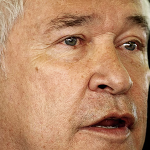





Photo credits: Erika Hilton: Zeca Ribeiro/Câmara dos Deputados, CC BY 3.0. Duda Salabert: photo courtesy of Câmara dos Deputados.
After Flávio Bolsonaro lost the Oct. 25 presidential runoff, transgender federal deputy Erika Hilton petitioned Justice Alexandre de Moraes on Oct. 26 to seize his passports, including his diplomatic passport. He also asked the Prosecutor-General’s Office to urgently consider restrictions on him.
Fellow transgender deputy Duda Salabert separately requested the seizure of his passport. That day, Moraes approved a Federal Police request to seize Flávio’s passports as part of a money laundering investigation involving him and lawyer Willer Tomaz.
Flávio, who has denied wrongdoing and has not been charged, did not surrender his passports. He left Brazil on Oct. 27 and arrived in Miami the following day after the State Department granted visas to him and his family.
Following reports of his departure, Hilton asked the court to freeze his and his wife Fernanda Bolsonaro’s assets and bank accounts, calling him a “traitor to the homeland.” As of Oct. 28, the court had not ruled on that request.
The petitions followed a history of conflict between the two deputies and the Bolsonaro family. Hilton and Salabert belong to the Socialism and Liberty Party (PSOL), an ally of President Lula da Silva’s Workers’ Party (PT). Lula, who won a historic fourth presidential term, has PSOL members in his cabinet: Guilherme Boulos serves as Secretary-General of the Presidency, and Sonia Guajajara heads the Ministry of Indigenous Peoples.
Hilton campaigned for Lula across Brazil’s Northeast before the runoff, telling a Fortaleza rally on Oct. 19 that Brazil did not want four more years of a Bolsonaro government. He has also said he may join the PT in 2027. Flávio’s platform proposed restricting transgender athletes from women’s competitions.
Hilton had sought similar measures against Flávio’s brother Eduardo in July 2025, when he asked Moraes to freeze Eduardo’s bank accounts and assets. Hilton accused Eduardo of working with the Trump administration on its 50% tariff on Brazilian goods. Eduardo replied on X, “I didn’t know João had asked to block my assets. João, hey, soccer on Saturday!” using a male name to refer to Hilton.

Hilton then sued Eduardo for transphobia in a São Paulo civil court, seeking R$20,000 (about $3,900) in damages, removal of the post and a ban on similar posts. The case remains pending after a judge granted Eduardo’s request to postpone the hearing until after the election.
Hilton, a 33-year-old deputy from São Paulo and former sex worker, according to the Washington Blade, was re-elected on Oct. 4 with nearly 1.6 million votes, the most ever received by a woman in a Chamber of Deputies election.
He co-authored the constitutional amendment, enacted by Congress on Oct. 16, that replaces Brazil’s six-day workweek with a five-day week and gradually reduces maximum weekly hours from 44 to 40. He has advocated going further, proposing a four-day, 36-hour week.
Hilton also introduced a bill granting amnesty to anyone charged with or convicted of abortion since 1940. He has sought to remove language from an abortion bill that would criminalize the procedure in rape cases. He chairs the Chamber’s Women’s Committee, a position that a PoderData poll found 74% disapproved of his holding the position.
Salabert, a former literature teacher from Minas Gerais who describes himself as vegan in his electoral filing, was re-elected on Oct. 4 with 229,535 votes. He left PSOL in 2019, calling the party structurally transphobic, and announced his return on March 31, 2026, after several years in the Democratic Labor Party (PDT).
He has said he entered politics in response to what he called the “coup” against Dilma Rousseff, Lula’s successor from the Workers’ Party. Brazil’s Senate voted 61–20 to remove Rousseff from office in August 2016 for breaking budget laws.
Salabert, who was born male, identifies as a woman and a lesbian, and is married to Raísa Novaes, a biological woman. Their biological child, Sol, was born in June 2019. Salabert stopped hormone treatment so Novaes could become pregnant. The couple chose a gender-neutral name so their child would not need to change it if it turned out to be transgender.
On January 8, 2023, a week after Lula’s inauguration, supporters of Jair Bolsonaro who rejected his election defeat stormed Congress, the Supreme Court and the presidential palace in Brasília. In March 2025, as Bolsonaro’s allies sought amnesty for the rioters, Salabert introduced Bill 1335/2025 to prohibit amnesty for anyone investigated or convicted of crimes against the democratic rule of law.
That month, he also asked the Prosecutor-General to seek Bolsonaro’s arrest over a rally speech in Copacabana and to seek restrictions barring him from social media and public events.
Salabert has also pursued legal action over statements about his gender. In a 2020 interview, Nikolas Ferreira, now a federal deputy for Bolsonaro’s Liberal Party (PL), said he would not recognize him as a woman and questioned whether his documents identified him as male or female, saying “it’s biology.”
Salabert sued, and a Minas Gerais court ordered Ferreira to pay R$80,000 in damages, later reduced to R$30,000 (about $5,900). Brazil’s Superior Court of Justice upheld the judgment in June 2025, making it final.
Commenting on Ferreira’s case in an August 2024 video, influencer Bianca Barreto called Salabert “a guy who says he is a trans woman, but is married to a woman and has a son or daughter.” In August 2026, Salvador’s 9th Criminal Court sentenced Barreto to two years in prison under a semi-open regime, which permits daytime release for work, and ordered her to pay R$20,000 (about $3,900) in moral damages. The case concerned her use of male pronouns and statements about Salabert’s gender.
Salabert’s Bill 4101/2024 would give people who legally change their sex from female to male one year to register for military service without a late-registration fine. Brazilian men must register in the year they turn 18, though registration does not necessarily lead to service. The bill argues that those legally classified as female at 18 should not face penalties for failing to register then.
Hilton’s companion bill, which would eliminate the fine for “transmasculine people,” was merged into Salabert’s proposal. On October 28, 2026, the Chamber’s Human Rights Committee approved the combined version by voice vote, adding confidentiality protections.
Hilton and Salabert submitted a bill on April 30, 2026, drafted by the National LGBTQIA+ Council, to establish “LGBTQIA+ Citizenship Houses” nationwide for victims of anti-LGBT discrimination and violence. It would also create policy agencies at all three levels of government and a national monitoring system. Hilton said the aim was to make the programs permanent state policy.
Salabert also co-authored a bill establishing a 12-to-30-year prison sentence for killing a lesbian because of her sexual orientation, which a Chamber committee approved this week. Other proposals would require restaurants in government agencies to serve vegan meals and ban the sale of glue rat traps nationwide.
Flávio remains in Miami with his family. During the campaign, Hilton sought to suspend “Tropa do Flávio”, a pro-Flávio WhatsApp channel he accused of spreading false content.
PT deputies Lindbergh Farias and Rogério Correia, joined by deputy-elect Ana Elisa Santos, have asked Moraes to order Flávio’s preventive arrest and request an Interpol red notice.
Flávio’s Senate term ends early next year. Hilton and Salabert will then begin their new terms in a Chamber where his Liberal Party won the largest bloc of seats.
The post Meet the Two Transgender Lawmakers Targeting Flávio Bolsonaro appeared first on The Gateway Pundit.