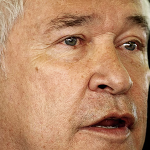




Is Tony Vaughan a bully or not? If you’d listened to the Labour MP for Folkestone and Hythe’s personal statement in the House of Commons last week, you might have concluded not. Vaughan was forced to give that statement by the Parliamentary Commissioner for Standards, after he was found to have breached parliament’s bullying and harassment policy in the way he treated a member of staff.
‘But many MPs have no idea what that more careful management should look like, and end up creating environments in their offices that sound very familiar to the one detailed in report on Vaughan.’
The statement Vaughan gave – which had to be cleared by the Speaker and an independent expert panel examining the complaint in advance – suggested a series of incidents in which he had variously hugged the complainant without her consent, snatched her phone out of her hand without her permission in order to join an online meeting, and ended phone calls abruptly without explanation. He did say in his statement that he accepted the findings in full, that his ‘behaviour had a real and continuing impact on her and her family, and I am truly sorry for this’, and that he had undertaken further training on how to manage staff. The reaction from some quarters, though, was to suggest that Vaughan hadn’t done anything so bad as to merit a public apology like this, and that the independent complaints and grievance scheme in Parliament isn’t working properly.
Now, the complainant herself has spoken out, telling LBC on condition of anonymity that his behaviour had been ‘completely toxic’ and getting worse and worse over time. She said: ‘I did not embark upon a lengthy parliamentary complaints process simply because of one unwanted hug, one incident involving my personal telephone or a handful of abruptly terminated calls.’
‘I complained because of the cumulative experience of working for someone whose behaviour I found unpredictable, intimidating and belittling.’
The complainant said she was a survivor of domestic abuse in her past, which will have made her both more vigilant and significantly more vulnerable than other colleagues. And having read the full report on Vaughan’s behaviour, I found it quite surprising that it had ended up being distilled into the statement that he gave to the Commons last week. The investigation into the complaint was not a simple one: an independent investigator initially said Vaughan’s behaviour didn’t breach parliament’s policy, whereas the parliamentary commissioner for standards disagreed and decided that he did. Then the independent expert panel, which is made up of two KCs and one MP, considered Vaughan’s appeal against the decision, and only accepted it on one out of four points, which was on an allegation about him sending her an email late at night to complain that it was ‘highly unsatisfactory’ that he had missed a meeting, which he considered to be the complainant’s fault. The other three included this exchange, as detailed in the report:
On 27 February 2025, during a canvassing day in the constituency, the respondent stated he had to attend a meeting on Zoom with a neighbouring MP. When the complainant expressed her surprise as it was not in his diary, the respondent snapped at the complainant, saying ‘No, it’s not in the fucking diary is it [C]!’ in an accusatory tone. After the complainant managed to get a Zoom link for the meeting for the respondent, the respondent snatched the complainant’s personal phone out of her hand and said words to the effect, ‘I’ll do the call on your phone’.
That was considered to be a breach of the code of conduct on bullying. And the full account does sound much less acceptable than the version given to the Commons, which made it sound like Vaughan was a boss in a hurry to make a call, who could merely do with some training.

Either way, the fact that the complainant felt compelled to give even more of her side of the story this week suggests that she doesn’t feel justice has been done in this case, and that the media commentary around it has been unfair. And neither has the independent complaints and grievance scheme managed to boost confidence in it from either MPs nor staffers, both of whom have ample reason to doubt that they’ll be treated justly if a complaint is made against them, or if they want to complain.
Vaughan certainly seemed content to accept that he was at least a bad boss, one who needed better training in order to manage his staff properly under pressure. That could be said of many MPs, who find themselves running offices in Parliament and in their constituencies, often without any training or prior experience of management. They are also often employing young staff, who might have different generational views on what a working environment should be like, and who generally require more careful management. But many MPs have no idea what that more careful management should look like, and end up creating environments in their offices that sound very familiar to the one detailed in the report on Vaughan.
Neither are they given any feedback or support on how to change those environments by parliament. Because each MP effectively functions as a discrete small business, there is very little accountability for how they run those businesses, despite the staff being paid for by the taxpayer and through IPSA. There is no meaningful HR department in parliament to which Vaughan could have gone looking for advice on how to be a decent boss, or how to manage a staffer he was finding he didn’t get on with – and similarly, that staffer had nowhere really to go to start raising concerns early.
There is no line management above MPs or appraisal system either for them or their staff that would flag issues before they reached the stage of a lengthy complaints process and dissection in the media. And so when an office environment is slowly becoming worse and worse, there is no early intervention and correction. This case could so easily have been something even smaller than Vaughan’s statement in the Commons suggested, had there only been a proper system that existed below the nuclear option of the complaints process. And until Parliament gets serious about the many young staff that its often inexperienced MPs employ, there will be many more cases where neither complainant nor respondent seems quite to have received the justice they deserved.
The post Parliament needs HR appeared first on The Spectator Australia.