





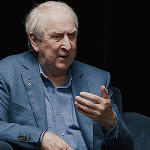

Four years of promises, modelling, and National Press Club performances have run into higher electricity bills, angry people who live under the transmission lines, and billions poured into a policy failure that was obvious from the start. Bowen’s pre-COP31 fizzer in Fiji is the latest symbol of it. Seeing him fall asleep at his own snooze-fest says it all.
In Nadi this week he called the gathering a ‘pretty pedestrian affair’. It is costing taxpayers about $20 million, on the contracts published so far, and he refused to say how much when asked on national radio.
He has form. In March 2023, at the Sydney Institute, I asked him what happens if the plan fails and the lights go out. What is your Plan B?
‘My Plan B is for that not to happen.’
That was the policy. Then as if on cue, the lights went out in Nadi.
For many Australians, electricity bills are often the biggest household expense after the monthly mortgage repayment.
A leftie colleague a while back spent a fortune on rooftop solar, only to find that the saving was so minuscule after the repayments for the kit, she was livid she’d been sold a dud.
Chris Bowen has spent the best part of four years insisting that reality would come round to his way of thinking. It hasn’t. The wind, as it were, has dropped.

When pressed on blackouts and high prices in countries further down the renewables road, he did not accept the premise. Nuclear was ruled out for as long as Labor held office.
Our troubles began with Rewiring the Nation. In November 2022, the government was spruiking $20 billion for new transmission, while the Parliamentary Budget Office could not say with any certainty what it would cost. Building enough wires to connect wind and solar spread across the continent meant overbuilding transmission three or four times over.
Landholders along HumeLink were already pushing back. Bowen dismissed small modular reactors as a ‘pipe dream’. His own rollout looked rather more like one.
Then there was the $275. Labor’s promise, backed by Anthony Albanese’s assurance that ‘we have done the modelling’, was that household bills would fall by $275 a year by 2025. Within six months of the election, prices were forecast to rise by around 35 per cent the following year. By 2023, it was obvious the cut would not happen.
By the time 2025 actually arrived, households were hundreds of dollars a year worse off, and the pledge had been quietly dropped amid blame on ‘global factors’. When Chris Uhlmann put the $275 to Bowen at the National Press Club, the minister dodged. By then it had become a cruel joke.
Labor’s old habits die hard. Before coming to power, Labor stated its infrastructure policy was too important to be ‘decided by politics and vested interests’. It’s interesting that the idea of ‘global warming’ became ‘climate change’, then ‘global boiling’, and most recently, ‘climate emergency’. Even Chris Bowen called it ‘energy security’ at the National Press Club recently. So much for a de-politicised approach to infrastructure policy.
Bowen does not do costings, he does ‘modelling’. In September 2024, the latest round of modelling was aimed not at telling voters what his plan would cost, but at attacking Peter Dutton’s nuclear plan. It rested on GenCost assumptions that are hotly disputed and compared apples with oranges. Bowen wanted Dutton’s plan costed down to the last reactor. His energy policy, by late 2024, amounted to ‘not Mr Dutton’s policy’.
Meanwhile, the bills keep doing the arguing. The like-for-like costings of his own rapidly failing plan are yet to be published.
AEMO has conceded that transmission costs are running up to 55 per cent above its 2024 estimates, with substations up to 35 per cent higher. Snowy 2.0 and HumeLink have blown out. Those costs do not vanish. They are socialised through the bill. My own bill went up 34 per cent. The ‘cheapest form of energy’ keeps getting dearer.
Meddling with markets is Labor’s worst vice. The $2 billion Hydrogen Headstart was a subsidised false market from the outset. Green hydrogen costs six to eight times as much as grey or pink hydrogen and needs yet more wind, solar, and wiring to produce. Projects fell over at home and abroad. Whyalla’s ‘green steel’ dream, built on the same hydrogen fantasy, ended in a $2.4 billion bailout. Billions were spent trying to pick a winner that was never going to win, while proven options, nuclear above all, were kept off the table.
Then came the community battery, offered up in 2024 as if it were an answer to nuclear. Bowen’s well-touted Bexley North battery switches off in a blackout and stores surplus solar for a modest number of homes. By my rough maths, covering overnight demand across the country would take about 104,000 more of them and something like $40 billion in subsidies. It was spin, piecemeal and uncosted, chasing the 82 per cent target rather than keeping the lights on.
The people expected to host this experiment have noticed. At Port Stephens and along the coast, farmers, fishers, tourism operators, and surfers were treated to tick-a-box consultation on offshore wind after the decisions had effectively been made. Investors later walked away from the Illawarra offshore wind zone.
In Upper Lachlan, which hosts more than 340 turbines, power prices were reported to be up about 40 per cent, with a further 9 per cent rise in July 2025.
Locals got the turbines, the transmission lines, and the higher bills. The temporary $150 rebates were consumed by ever-increasing prices.
Not that the minister was often around to see it. ‘Boeing Bowen’ has been a regular on the COP circuit, including Dubai, Baku, and now Nadi, with Antalya still to come. Meanwhile Turkey, the host, is still commissioning coal plants.
The man who lectures Australians on emissions has racked up an impressive personal tally of ministerial air miles. All the while, the portfolio at home has come undone.
This year, reality kicked in. By July, Zen Energy, once touted in political and media commentary as the ‘proof of concept’ for the green energy dream, went into administration. It is one of the biggest collapses of the transition so far. It is what happens when a government believes, in an almost Soviet fashion, that it can fund its way into new industries.
And in August, at the National Press Club, Bowen was asked who benefits now that wholesale prices have halved. He gave a fluent, confident non-answer. ‘Not households’ was the correct answer. Retail supply charges and time-of-use windows have shifted, and whatever savings exist for consumers are small and opaque. Lower retail prices have gone the way of the $275.
To be fair, the Coalition built some of the renewables scaffolding Bowen has since supercharged, and it has too often let him pass untouched while conservatives argued among themselves. That is an indictment of the Opposition. It is not an alibi for the minister.
Bowen still delivers his lines with polish and dogged chutzpah. But a performance only works if the audience suspends disbelief, and Australians who open their power bills are no longer in a position to do that.
Dr Michael de Percy @FlaneurPolitiq is the Spectator Australia’s Canberra Press Gallery Correspondent. If you’d like to support his writing, please shout him a drink over at Donorbox.
The post Fizzer in Fiji takes the wind out of Bowen’s turbines appeared first on The Spectator Australia.
