


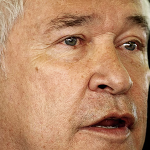




Vice President JD Vance told Laura Ingraham on Monday night that even his own personal friends have been contacting him to ask whether it is time to build bunkers and stockpile food and water.
Vance explained that while it is always good to be prepared, there is no reason for Americans to panic.
Speaking on The Ingraham Angle, Vance was asked directly about recent tech disruptions and warnings coming out of Europe.
“A lot of my friends have reached out asking if they should prepare to build a bunker or stock up on food and water. My answer to that is no,” Vance said.
“We don’t see a crisis coming down. But you have to be prepared for everything. We want to make sure we prevent the worst outcomes, but we’re also prepared for the worst outcomes.”
WATCH:
DOOMSDAY PREP? Vice President JD Vance reveals even his own friends are asking whether it’s time to build bunkers and stockpile food and water.
Speaking with @IngrahamAngle, Vance says there’s no reason to panic, insisting the administration sees no imminent crisis but remains prepared for the worst.
Download the Fox News app or visit https://t.co/gPHiho5zni for more: https://t.co/a1AU3sZo4I

— Fox News (@FoxNews) November 17, 2026
Ingraham’s question comes amid a series of concerning events of the past two weeks. She specifically noted that countries like the United Kingdom and France have been urging citizens to keep days’ worth of food and water on hand.
Vance pushed back on the idea of an imminent domestic crisis while defending the administration’s approach.
“A lot of what is being reported on is just basic good government, making sure that our military is prepared, God forbid, if there was a crisis,” the vice president said. “But we don’t see a crisis coming down the pipe. In part, what the president has been so successful at is ensuring we are reinvesting in the United States of America and we are better prepared for crises. That doesn’t mean crisis is around the corner; that just means you’ve got a government that is actually preparing for it.”
There has been a string of high-profile technology issues nationwide.
The interview was published hours after major banks experienced widespread service problems. Customers of Chase, Bank of America, Wells Fargo, U.S. Bank and others reported trouble logging into accounts, viewing balances, and completing transfers.
Chase attributed the issue to a software bug in its systems, not a cyberattack, and said customers still had access to funds, though some transactions were delayed.
The same day, United Airlines also reported a technology issue that stopped flights from departing.
On November 13, the FAA issued a nationwide ground stop lasting more than four hours after a telecommunications router problem, tied to a contractor upgrade from copper to fiber at sites in Arkansas and Texas, flooded the aging FAA network and disrupted radar and communications.
Approximately 12,000 flights were canceled, and more than a million passengers were affected.
The same week, a global Microsoft 365 outage and a separate Workday disruption occurred.
Driving much of the discussion is also the Pentagon’s FORTRESS initiative.
Defense Secretary Pete Hegseth announced the program on September 30 as “the nation’s insurance policy.”
Internal planning documents reviewed by Fox News said they are calling for major military bases to be able to sustain essential operations, including power, water, fuel, and communications, independently for at least 90 days if civilian infrastructure is disrupted in a major conflict.
The plan envisions microgrids, large-scale battery storage and portable nuclear reactors so bases can island from the civilian grid.
Pentagon officials have described dependence on commercial power as an “intolerable risk,” with one noting that “power is combat now.”
Many high-level officials, including Pete Hegseth, Marco Rubio, Scott Bessent, Todd Blanche, Army Secretary Dan Driscoll, and Stephen Miller, are currently living on military bases citing security concerns.
Outside of the US, governments have been more explicit about prepping.
The United Kingdom’s “Be Ready” campaign, launched in October, tells households to stock at least three days of food, roughly three liters of drinking water per person per day, cash, a radio, a flashlight, batteries, and essential medicines.
The European Commission has issued similar 72-hour self-sufficiency guidance as part of its Preparedness Union Strategy, citing risks from cyberattacks, infrastructure sabotage, extreme weather, and the ongoing war in Ukraine.
France, Germany, and several other European countries have issued similar advisories in recent weeks.
The post WATCH: JD Vance Says His Friends Are Asking About Bunkers and Stockpiling Food After FAA Meltdown and Global Outages appeared first on The Gateway Pundit.
