I write these words with pride in my family, sorrow at what is happening in our country and an urgent sense of responsibility.
On December 6, 1938, my great-uncle, William Cooper, led a small Aboriginal delegation through the streets of Melbourne to the German Consulate.
He was approximately 77 years old. He possessed no wealth, political office or institutional power. As a Yorta Yorta man, he lived in a country that had dispossessed our people of their land, denied them fundamental rights, and subjected them to discriminatory laws controlling where they could live, work, and travel.
Yet William Cooper did not walk to the German Consulate that day to plead his own cause.
He went to protest the persecution of the Jewish people.
Only weeks earlier, during Kristallnacht – the Night of Broken Glass – synagogues had been burned, Jewish homes and businesses destroyed, Jews murdered, and approximately 30,000 Jewish men arrested and sent to concentration camps.
William Cooper and the Australian Aborigines’ League sought to deliver a resolution condemning the Nazi government’s ‘cruel persecution of the Jewish people’.
The German Consulate refused to receive the delegation. The letter disappeared. But the moral power of that walk has never disappeared.

It is regarded as one of the very few private protests anywhere in the world against Kristallnacht at that time. My great-uncle recognised the meaning of persecution before much of the world was prepared to confront it. He saw hatred gathering strength and refused the comfort of silence.
What makes his action so extraordinary is that William Cooper was himself struggling to have his people recognised as human beings with rights.
He had gathered 1,814 Aboriginal signatures for a petition asking King George VI to prevent the destruction of our people, improve their living conditions and provide Aboriginal representation in the Australian Parliament. The Australian government refused to forward the petition to the King. The original document was subsequently lost.
In January 1938, he had also helped organise the first Aboriginal Day of Mourning. While the rest of Australia celebrated 150 years of European settlement, Aboriginal leaders protested the seizure of their land and demanded ‘full citizen status and equality within the community’.
Australia had largely refused to hear William Cooper’s appeal for his own people. Yet, ten months later, he heard the cry of Jews thousands of kilometres away.
That is the moral inheritance he left my family, the Yorta Yorta people and all Australians.
A painful truth must now be spoken
It causes me profound pain to see that inheritance placed in jeopardy today.
At a time when Jewish Australians are experiencing the most frightening wave of antisemitism in generations, some Indigenous activists have aligned themselves with political movements and ideologues that demonise Israel, collectively blame Jews, and treat Jewish Australians as legitimate targets for intimidation and exclusion.
Let me be clear: this does not represent every Aboriginal or Torres Strait Islander person. Many Indigenous Australians have rejected antisemitism and continue to stand beside their Jewish friends. No single political faction speaks for the diversity of our peoples.
But we cannot pretend that there is no problem.
I have watched some people attempt to conscript our Aboriginal identity, our flag, and our history of dispossession into a rigid far-left anticolonial ideology that divides the world into simplistic categories of oppressors and oppressed.
Within that worldview, Jews are too often stripped of their history, their ancient identity, and their connection to the land of Israel. They are recast as uniformly white, foreign and colonial. Jewish suffering is minimised, the atrocities of October 7 are excused or pushed aside, and Jewish Australians are expected to answer personally for every decision of an Israeli government.
This is not justice. It is not solidarity. It is not the legacy of William Cooper.
It is abhorrent.
Supporting the dignity, safety, and legitimate aspirations of Palestinian people is not antisemitic. Criticising the policies or conduct of an Israeli government is not inherently antisemitic. Jewish Australians themselves hold many different views about Israeli politics and the conflict.
But there is a moral boundary.
That boundary is crossed when Jews are collectively blamed; when the murder or kidnapping of Jewish civilians is excused; when Jewish students are harassed or excluded; when Jewish institutions are targeted; when antisemitic conspiracy theories are repeated; when ‘Zionist’ is used as a coded racial slur; or when Jewish people are told that their fear and grief do not matter.
Since October 7, 2023, Australia has recorded a reported 246 per cent increase in antisemitic abuse and vandalism. Jewish students and academics have described harassment, exclusion, and fear on Australian campuses. Synagogues, homes, businesses, and community institutions have been attacked. In December 2025, a Jewish Hanukkah celebration at Bondi became the scene of a murderous terrorist attack.
This is not an abstract political debate. Jewish Australians are frightened for their children, their families and their future in this country.
At such a time, silence is not neutrality.
Jewish Australians stood beside our people
William Cooper’s protest was not transactional. He did not stand with the Jews in expectation of repayment. He acted because persecution was wrong and because a man who understood injustice could not remain indifferent to the suffering of another people.
Yet, in the decades that followed, Jewish Australians did stand beside Aboriginal and Torres Strait Islander people – as lawyers, scholars, activists, philanthropists, volunteers, and friends.
Jewish refugees Hans Bandler and Emil and Hannah Witton worked alongside Indigenous and South Sea Islander civil-rights leaders during the campaign that led to the 1967 referendum.
Faith Bandler, Hans’s wife and a descendant of South Sea Islanders, was one of that campaign’s indispensable leaders. Hans had fled Nazi persecution in Vienna and supported Faith throughout her struggle against racial discrimination. Emil and Hannah Witton, refugees from Nazi Germany, joined the Aboriginal-Australian Fellowship after recognising disturbing parallels between the racial ideology they had escaped and the discrimination confronting First Nations Australians.
The leadership belonged to Faith Bandler and the Aboriginal and Torres Strait Islander campaigners who fought for change. But their Jewish allies stood beside them.
In 1965, Jim Spigelman – the son of Holocaust survivors and later Chief Justice of New South Wales – joined Charles Perkins and other university students on the Freedom Ride through regional New South Wales.
They challenged segregation at swimming pools, clubs and public facilities and exposed appalling inequality in housing, health and education. Outside Walgett, Spigelman used his camera to record the hostile convoy that followed the students’ bus and forced it from the road.
Jewish support was also important in the development of Aboriginal legal assistance.
In 1964, Jewish legal academic Louis Waller and Jewish scholar Colin Tatz joined Elizabeth Eggleston and barrister Colin Campbell in establishing an informal legal aid service for Aboriginal people in Melbourne. They helped people who had been arrested, assisted with bail and arranged legal representation.
Waller later became the foundation president of the Victorian Aboriginal Legal Service. Ron Castan and Ron Merkel were also among its founders. Significantly, the non-Indigenous lawyers stepped away from its governing body when it became clear that the service should be controlled by Aboriginal people themselves. That was solidarity based on empowerment, not paternalism.
The Jewish lawyer who helped overturn terra nullius
No Jewish lawyer occupies a more important place in Australian Indigenous legal history than Ron Castan QC.
The son of Russian Jewish immigrants, Castan became the founding secretary of the Victorian Aboriginal Legal Service. He appeared in the landmark racial-discrimination case of Koowarta v Bjelke-Petersen and later became senior counsel for Eddie Koiki Mabo and the other Meriam plaintiffs.
The victory in Mabo v Queensland (No 2) belongs first to Eddie Mabo, the Meriam people and the plaintiffs who asserted the truth of their law, culture and ownership.
But Ron Castan and his legal colleagues helped that truth break through the walls of Australian common law.
For ten years, Castan worked on the case that destroyed the legal fiction of terra nullius and established that native title could survive British sovereignty. His contribution was legal, strategic, personal, and financial.
When the case was desperately short of money, Castan persuaded lawyers to provide free assistance. His daughter Melissa Castan and son-in-law Robert Lehrer joined the legal team. He housed members of the team, advanced money so witnesses from the Torres Strait could travel to Brisbane, offered to guarantee accommodation costs and worked for substantially reduced or negligible fees.
Solicitor Greg McIntyre later said that Castan’s generosity ‘effectively underwrote the whole claim’.
Former High Court Justice Michael Kirby observed that Castan’s Russian Jewish parents had instilled enduring values in him and that his awareness of the Holocaust gave him particular sensitivity to the injuries inflicted upon Indigenous people.
Castan also helped conceive the Wik litigation and supported Indigenous resistance to attempts to weaken native-title rights.
Jewish communal leader Mark Leibler AC continued this work. Under his leadership, Arnold Bloch Leibler represented the Yorta Yorta people – William Cooper’s own people – in their native-title claim and provided extensive pro bono assistance to Indigenous communities and organisations. Leibler co-chaired Reconciliation Australia, the Expert Panel on Constitutional Recognition and the Referendum Council whose work led to the Uluru Statement from the Heart.
Human-rights lawyer George Newhouse and the National Justice Project have represented First Nations families affected by deaths in custody, mistreatment in health care, child removal and discriminatory government action.
Jewish philanthropy has supported the recording of Indigenous oral history through the Rona Tranby Trust, established from a bequest by Holocaust survivors Thomas and Eva Rona. Shalom Gamarada has provided accommodation, academic assistance and pastoral support to Aboriginal and Torres Strait Islander university students, helping educate new generations of Indigenous doctors, lawyers and professionals.
The Executive Council of Australian Jewry supported the Uluru Statement from the Heart and overwhelmingly endorsed the 2023 Voice referendum. Jewish communities have honoured William Cooper and our family in Australia, Germany and Israel. A memorial to him stands at Yad Vashem, and in 2008, on the 70th anniversary of his march to the German Consulate, 70 trees were planted in his honour in the Freedom Forest in Israel.
We must be honest about our shared history
Not every Jewish person stood with us. Jewish organisations did not always do enough. Professor Colin Tatz warned against exaggerating the history and challenged his own community to turn sympathy into sustained action.
But the assistance that was given was real. It was practical, courageous and, at crucial moments, transformative.
Nor should we equate the Holocaust with the dispossession, massacres, forced removals and continuing disadvantage experienced by Aboriginal and Torres Strait Islander peoples. These are distinct histories, and each must be respected on its own terms.
But distinct suffering can create moral recognition.
Jewish Australians did not have to stand beside us in our struggle for civil rights, legal representation, education, and land justice. Those who did so were guided by conscience and by the conviction that their own history imposed a responsibility to oppose racism against others.
Today, we must demonstrate the same moral courage.
Our identity must not be hijacked
I appeal directly to my Aboriginal and Torres Strait Islander brothers and sisters: do not allow our identity to be hijacked by an ideology that demands hostility towards the Jewish people.
Do not allow our history of dispossession to be used to erase Jewish history.
Do not allow our flag to be carried beneath banners that glorify terrorism, excuse the murder of civilians, or spread hatred against Jews.
Do not accept the false proposition that solidarity with Palestinians requires hostility towards Israel or Jewish Australians. We can recognise Palestinian suffering and aspirations while also defending Jewish safety, dignity, and peoplehood. Compassion is not a ration that must be withheld from one people to give it to another.
We know what it means to have our connection to land denied.
We know what it means to have our history rewritten by others.
We know what it means to be reduced to a stereotype, blamed collectively and told that our pain is politically inconvenient.
How, then, can we permit those things to be done to Jewish people?
The far-left anticolonial movement does not own Aboriginal identity. It has no right to conscript our ancient cultures and living traditions into its ideological war. Our people are capable of moral judgment without being assigned a political position by activists, academics or movements that claim to speak for us.
William Cooper did not divide the world into fashionable political categories. He saw human beings being persecuted and took a stand.
Remember William Cooper
As William Cooper’s great-nephew, I feel a responsibility to speak when the legacy of my great-uncle is most needed.
He stood for the Jewish people when he had almost nothing to offer except his voice – and when his own country would scarcely listen to that voice.
He did not ask Jewish people how they voted. He did not demand that they renounce their identity. He did not decide that their suffering was less important because they lived on the other side of the world.
He recognised their humanity.
That is the standard he left us.
To honour William Cooper is not merely to repeat his story at ceremonies. It is not enough to unveil plaques, plant trees or speak proudly of what he did in 1938.
We must live his example when it is difficult.
That means condemning antisemitism clearly and without qualification. It means refusing to share platforms with those who glorify violence or demonise Jews. It means reaching out to Jewish neighbours, schools, synagogues and community organisations. It means listening when Jewish Australians tell us they are afraid.
It means standing beside them now.
I call upon Aboriginal and Torres Strait Islander leaders, elders, organisations, academics, students and young people to remember William Cooper’s courage. Let us reject every attempt to turn one people’s suffering into hatred of another. Let us oppose antisemitism with the same determination with which we oppose racism against our own people.
When the Jewish people faced persecution, my great-uncle William Cooper stood with them.
Today, Jewish Australians again need friends with courage.
This is our time to stand with our Jewish brothers and sisters.
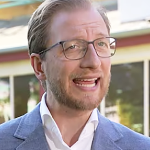
John Briggs, proud Yorta Yorta man and great-nephew of William Cooper
The post We must stand with the Jews appeared first on The Spectator Australia.